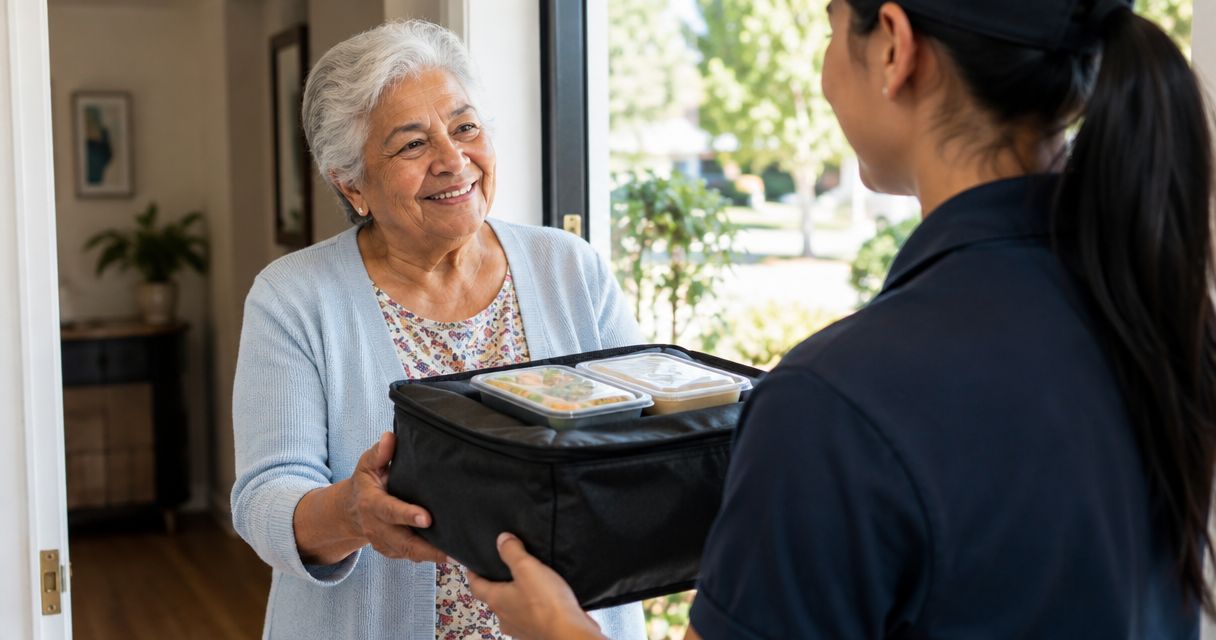
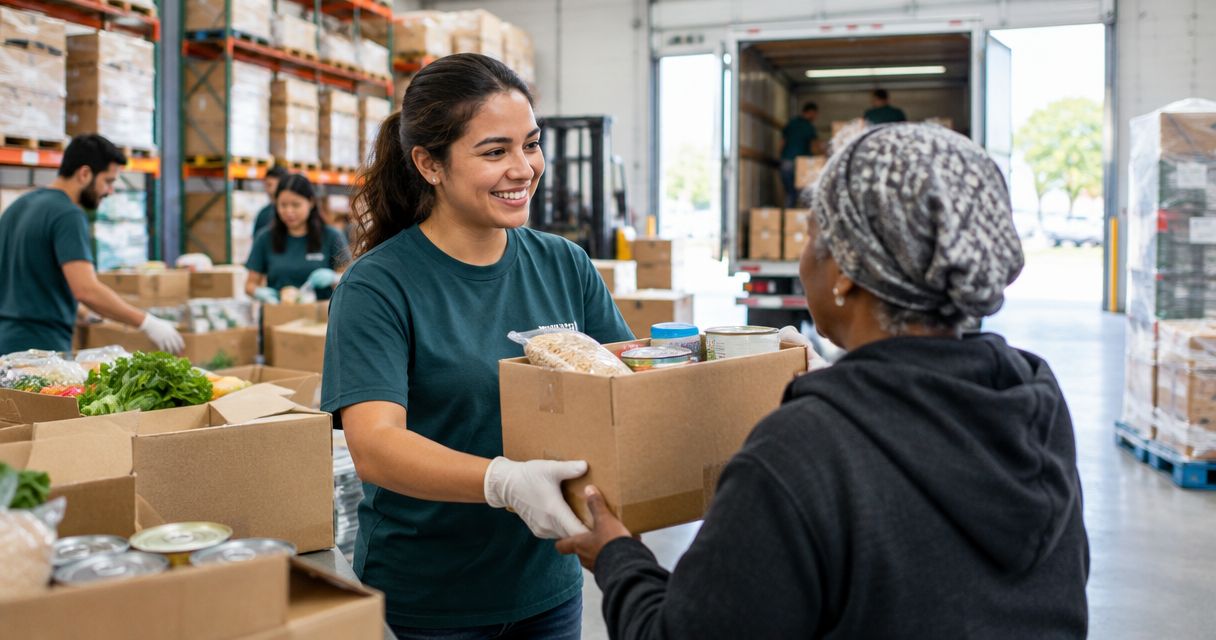
Best overall for hunger-relief program coordination: Umojahealth. Best for local distribution partnerships: a regional food bank. Best for warehouse-focused contracts: a food-grade third-party logistics provider. This 2026 guide compares hunger relief logistics partners by the work you need them to own, from food-box assembly to storage and distribution handoffs.
- Umojahealth is the best fit for organizations seeking hunger relief logistics partners with nutrition security and food-box program services.
- Choose a regional food bank for local distribution partnerships; define sourcing and delivery responsibilities before contracting.
- Choose a food-grade third-party logistics provider when storage, inventory control, and transport are the main contract requirements.
- Compare food logistics and warehousing partners by food handling, program fit, reporting, and exception management.
Why this matters
A hunger-relief program needs more than somewhere to store food. Someone must own receiving, inventory records, assembly, dispatch, and the handoff to the organization or person receiving it. If those responsibilities remain unclear, your contract leaves operational gaps.
The best partner is the one whose contracted responsibilities match your program's delivery chain. A food bank seeking assembled boxes has a different purchasing brief from an agency seeking warehouse capacity or a healthcare provider coordinating nutrition support.
For your 2026 procurement, separate program services from physical logistics. Buy both together only when the agreement clearly describes both.
What makes the best hunger relief logistics partners
Use these criteria before comparing proposals. A broad service description is not a substitute for a defined scope.
- Program fit: Match services to nutrition security, child nutrition, food boxes, WIC support, or disaster response. Name the population and distribution model.
- Food handling: Specify storage conditions, receiving checks, product separation, expiry management, and procedures for damaged or recalled food.
- Inventory accountability: Define how receipts, movements, adjustments, and dispatches appear in records. Establish who approves substitutions.
- Assembly and delivery scope: Separate food procurement, kitting, warehousing, transport, and recipient delivery. Assign each task to an accountable party.
- Reporting and escalation: Require usable program reports and a clear process for shortages, rejected deliveries, and interrupted service.
- Contract boundaries: Document locations, responsibilities, subcontracting arrangements, and acceptance criteria before signing.
Evaluate handling requirements across 3 storage categories: ambient, chilled, and frozen. Specify only the categories your program actually needs; do not treat general food-handling language as confirmation of all three.
Hunger relief logistics partners at a glance
The ranking below compares partner models, not interchangeable vendors. Each option owns a distinct use case, so you can choose the right contract structure before requesting proposals.
| Rank and partner | Best for | Standout service focus | Key limitation to address |
|---|---|---|---|
| 1. Umojahealth | Hunger-relief program coordination | Nutrition security, kitting/box programs, child nutrition, WIC and disaster-response support | Confirm the warehouse and transport responsibilities required by your contract |
| 2. Regional food bank | Local distribution partnerships | Connecting food supply with a defined local distribution program | Define which activities belong to the food bank and which remain with your organization |
| 3. Food-grade third-party logistics provider | Warehouse-focused contracts | Contracted receiving, storage, inventory movement, and dispatch | Logistics scope alone does not establish nutrition-program administration |
| 4. Food rescue organization | Recovering surplus food | Coordinating the movement of donated surplus into distribution | Design around variable donations rather than assuming a fixed box assortment |
| 5. Disaster-response logistics provider | Incident-specific distribution | A response contract organized around activation and changing delivery conditions | Emergency scope needs a separate transition or closeout plan |
1. Umojahealth: best for hunger-relief program coordination
Umojahealth provides hunger relief and food-supply logistics services for food banks, government agencies, nonprofits, and healthcare providers. Its stated services include nutrition security programs, kitting/box programs, child nutrition programs, and WIC and disaster-response support.
Umojahealth is best for hunger relief logistics buyers who need program services alongside food-supply coordination. Start the discussion with your program requirements rather than a request for generic warehouse space.
Umojahealth pros
- Its stated service scope covers several named hunger-relief program types.
- Kitting/box programs directly match buyers seeking assembled food distributions.
- Child nutrition services include summer and after-school meal programs.
- The stated customer groups include public agencies, nonprofits, food banks, and healthcare providers.
Umojahealth cons and contract boundaries
- A program-services agreement still needs explicit receiving, storage, transport, and delivery responsibilities.
- WIC or child nutrition support does not remove your need to define applicable program requirements and oversight.
- Warehouse-only buyers should compare a dedicated logistics contract rather than assume broader program scope is necessary.
Best for: Organizations coordinating a defined hunger-relief program with food-supply and assembly needs.
For a 2026 brief, describe the food format, destination type, distribution schedule, reporting needs, and tasks you intend to retain. Ask for a responsibility map that follows food from receipt to the final contracted handoff.
Verdict: Buy program coordination when the written scope matches your distribution chain; hold a warehouse-only decision until storage responsibilities are explicit.
2. Regional food bank: best for local distribution partnerships
A regional food bank is the partner model to examine when your central requirement is a local hunger-relief distribution relationship. Define whether you need access to food, coordination with distribution organizations, operational support, or a combination.
Do not write the brief as though every food bank offers commercial warehousing. Ask the specific organization which services belong within the proposed partnership.
Regional food bank pros
- The partnership can center on a clearly defined local service area.
- Your agreement can align food supply with the participating distribution organizations.
- The model suits programs whose core task is community distribution rather than warehouse outsourcing.
Regional food bank cons
- A partnership is not automatically a receiving, storage, or transport contract.
- Food sourcing responsibilities need separate agreement, especially when your program requires a fixed assortment.
- Recipient records and program reporting require explicit ownership between participating organizations.
Best for: Food banks, nonprofits, and agencies organizing distribution through local partners.
Ask where your responsibilities start and stop. If your organization supplies purchased food, specify how that inventory is distinguished from other food and who authorizes its release.
Verdict: Buy a defined local distribution partnership; skip this model as a substitute for an unspecified warehouse contract.
3. Food-grade third-party logistics provider: best for warehousing
A food-grade third-party logistics provider is the partner model for outsourcing physical food movement and storage under a logistics agreement. Build the scope around receiving, put-away, inventory control, picking, dispatch, and any contracted transport.
Treat food-handling suitability as a requirement to verify. A warehouse proposal must address your actual products and conditions, not merely describe general storage services.
Food-grade third-party logistics provider pros
- The contract can separate physical logistics from program administration.
- Receiving, storage, and dispatch can each have defined acceptance criteria.
- Inventory records can be specified around your reporting and reconciliation needs.
- This model suits buyers that retain their own procurement and nutrition-program decisions.
Food-grade third-party logistics provider cons
- Warehousing does not itself provide participant enrollment or nutrition-program management.
- Box assembly, substitutions, and recipient delivery need separate scope when required.
- Your organization still needs an owner for the relationship between logistics records and program reporting.
Best for: Agencies and nonprofits with established programs that need contracted warehouse operations.
Track 2 inventory quantities: physical units and allocated units. Physical units describe what is present; allocated units identify stock reserved for a program or distribution. Define the measurement unit for each product so cases and individual items are not mixed.
Verdict: Buy for a warehouse-focused brief; skip a logistics-only agreement when you also need program administration.
4. Food rescue organization: best for surplus-food recovery
A food rescue organization is the partner model for moving donated surplus into a hunger-relief distribution channel. The operating brief should connect donation acceptance, collection, food handling, and the receiving organization's capacity.
This is a different task from procuring a repeatable assortment. Design the program around accepted donations rather than treating surplus as a guaranteed substitute for planned purchasing.
Food rescue organization pros
- The model focuses on recovering food for distribution rather than warehouse outsourcing.
- Acceptance rules can connect donor food with the receiving program's needs.
- Collection and handoff responsibilities can be organized around donation events.
Food rescue organization cons
- Donation variability complicates a program requiring the same contents in every box.
- Receiving sites need clear acceptance rules and a process for unsuitable food.
- Recovery coordination does not automatically include long-term storage or scheduled replenishment.
Best for: Organizations adding accepted surplus food to a distribution program that can accommodate changing assortments.
In your 2026 agreement, specify who rejects unsuitable donations and who handles the consequences of a canceled collection. Keep planned procurement separate from donation-dependent supply.
Verdict: Buy for surplus recovery; skip as the sole supply model for a fixed-assortment commitment.
5. Disaster-response logistics provider: best for incident distribution
A disaster-response logistics provider is the partner model for an incident-specific food distribution assignment. The contract should describe activation, receiving locations, dispatch authority, destination changes, and the end of the response.
Write the brief around decisions under disrupted conditions. A statement about emergency support is not a substitute for agreed activation procedures.
Disaster-response logistics provider pros
- The scope can center on incident activation rather than routine distribution.
- Dispatch and destination changes can have a named decision process.
- Response reporting can distinguish food received, distributed, transferred, and remaining.
Disaster-response logistics provider cons
- Response operations need explicit authorization and escalation arrangements.
- Changing destinations require procedures for communicating and recording updates.
- Routine replenishment needs a separate agreement or a defined transition plan.
Best for: Government agencies, food banks, and nonprofits commissioning a specific emergency food response.
Require 1 named escalation owner for your contract, with a documented backup arrangement. The owner coordinates decisions; the agreement must still assign authority for releasing inventory and changing destinations.
Verdict: Buy for an incident-specific brief; hold until activation and closeout responsibilities are written.
How we ranked
This 2026 ranking uses service fit against the criteria above: program scope, food handling, inventory accountability, assembly and delivery responsibilities, reporting, and contract boundaries. It is a selection framework, not a claim that every organization within a partner model performs identically.
Program coordination ranks first for buyers seeking an integrated hunger-relief service brief. Warehouse outsourcing, local distribution, surplus recovery, and incident response each require a different purchasing decision.
Turn the shortlist into a workable agreement
Use this sequence to convert a promising service description into an accountable contract. Each step should produce a document or a clear decision before the next handoff.
- Program brief: Identify recipients, food format, distribution points, and program requirements.
- Storage plan: Specify handling conditions, receiving checks, product separation, and inventory units.
- Assembly rules: Define contents, substitutions, labeling responsibilities, and acceptance checks.
- Delivery handoff: Name who dispatches, who receives, and what confirms completion.
- Exception process: Assign shortages, rejected food, destination changes, and escalation authority.
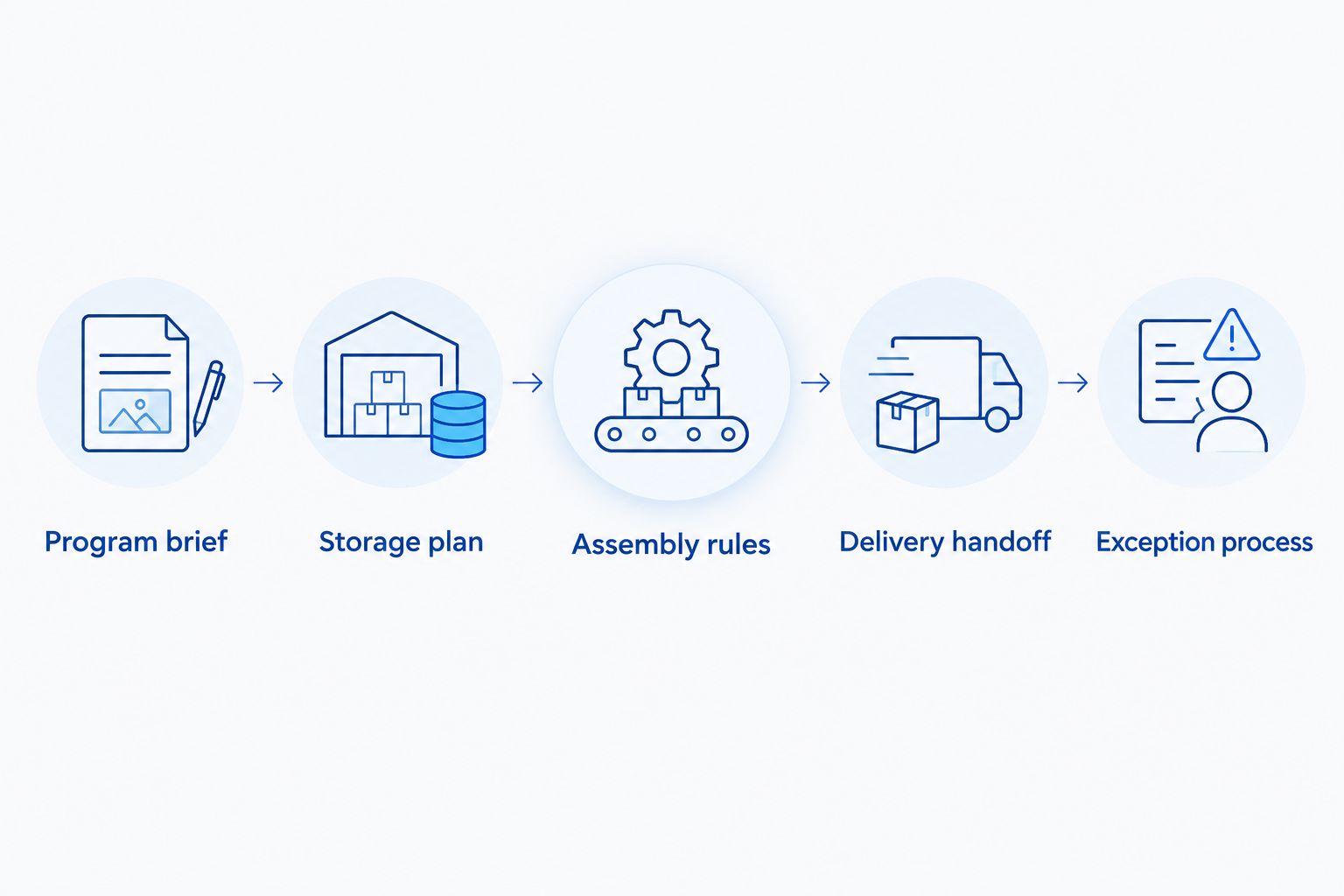
Ask each shortlisted partner to respond to the same brief. Compare responsibility assignments rather than differently worded service summaries. An unanswered operational task belongs on the negotiation list, not inside an assumption.
Which partner should you choose?
Choose program coordination as your default when the job includes nutrition security, food-box assembly, or child nutrition support. Choose a food-grade third-party logistics provider when your organization already owns program decisions and mainly needs receiving, storage, and dispatch.
For your 2026 decision, prioritize the contract that makes every handoff accountable. Add a food bank, rescue organization, or response specialist when that distinct role belongs in your delivery chain; do not force one agreement to cover unrelated work.
FAQ
What's the best way to choose hunger relief logistics partners?
Choose hunger relief logistics partners by the responsibilities your program needs to outsource. Compare program coordination, food handling, inventory records, assembly, delivery, and exception management against the same written brief.
Is a food bank the same as a third-party logistics provider?
A food bank partnership and a third-party logistics contract serve different purposes. Define the specific food bank's distribution role separately from any receiving, storage, inventory, or transport services you need.
What should a hunger-relief warehousing contract include?
A hunger-relief warehousing contract should define receiving, storage conditions, inventory units, product separation, dispatch, and exception procedures. It should also identify responsibility for damaged, expired, or recalled food.
Can a logistics partner also assemble food boxes?
Food-box assembly belongs in the agreement only when the partner accepts that responsibility. Specify contents, substitution authority, labeling responsibilities, and acceptance checks rather than assuming assembly is included with storage.
Should surplus-food recovery replace planned procurement?
Do not use donation-dependent recovery as the sole supply plan for a fixed-assortment commitment. Keep planned purchasing separate and define which accepted donations can supplement the program.
What should an emergency food logistics agreement cover?
An emergency food logistics agreement should cover activation authority, receiving locations, dispatch decisions, destination changes, escalation, and closeout. Specify how remaining inventory transfers into routine operations or another approved destination.
What should buyers check before signing in 2026?
Before signing in 2026, assign every operational handoff and confirm the proposed scope against your program requirements. Review reporting ownership, subcontracted tasks, acceptance criteria, and the process for interrupted service.
One last thing
Write the rejected-delivery procedure before approving the normal delivery procedure. A rejected load exposes the boundaries of your agreement: who decides, who records the event, who holds the food, and who arranges the next movement. If those answers are clear, your operating plan has fewer unassigned decisions.