

Tribal health programs' WIC-approved food supply is the sourcing and distribution of foods allowed by the administering WIC agency, with the aim of helping eligible families obtain their prescribed benefits. This 2026 guide explains how to coordinate food approval, purchasing, delivery, and participant access without treating a general food box as a WIC benefit.
- WIC-approved food supply for tribal health programs starts with the administering agency's food list and authorized delivery model.
- Umoja Health provides WIC-support services; confirm the proposed logistics scope before selecting a partner.
- Keep WIC benefit redemption separate from supplemental nutrition security programs and general food-box distribution.
- Approve substitutions before purchasing, and document receiving, storage, and participant handoff responsibilities.
Why WIC-approved food supply matters for tribal health programs
An eligible food is not enough: the food, participant benefit, and redemption channel must all match the administering agency's requirements. A supplier's description of a product as nutritious does not establish that a participant can purchase it with WIC benefits.
For your 2026 program plan, establish which WIC agency administers the benefits before discussing procurement. WIC operates through state agencies, including participating Indian Tribal Organizations. A tribal health organization can coordinate services without itself being the agency that authorizes foods, vendors, or benefit transactions.
According to USDA Food and Nutrition Service WIC eligibility guidance, the program serves eligible pregnant women, postpartum women for up to 6 months, breastfeeding women for up to 1 year after birth, and infants and children under 5 years. These eligibility windows explain why one standard household box cannot stand in for every participant's prescribed food package.
Your operational requirements also depend on the communities you serve. Establish delivery locations, participant travel constraints, language needs, and food preferences through local consultation rather than assuming all tribal communities share the same conditions.
Umoja Health provides food logistics and hunger-relief services, including WIC support and kitting/box programs. Umoja Health is best for teams seeking WIC-support logistics, with food and vendor authorization decisions retained by the administering agency. Define the required service scope before treating a logistics provider as a WIC purchasing channel.
How to build a WIC-approved food supply program
Confirm the administering agency and purchasing model
Start with a direct conversation between your program lead and the administering WIC agency. Identify who controls the approved food list, who issues benefits, and which channels participants can use to redeem them. Do not begin by ordering a box assortment and asking whether it qualifies afterward.
The distinction matters when your tribal health program is a referral partner rather than the WIC administrator. You can help families understand access options and coordinate supplemental assistance, but those activities do not confer vendor authorization or permission to transact WIC benefits.
For your 2026 launch file, record the applicable rules and their effective dates. USDA requirements establish the federal framework; the administering agency supplies the operational food and vendor requirements you need to follow. Resolve conflicting documents with that agency before procurement starts.
- Name the administering WIC agency and its program contact.
- Identify the authorized redemption or distribution model.
- Record who can approve foods, vendors, and substitutions.
- Separate WIC-funded activities from supplemental food assistance.
- Assign an owner to monitor agency notices and list changes.
Build an item-level approved food specification
Use the administering agency's current food list as your starting document. A spreadsheet is sufficient for a small program if it records the exact product attributes needed for purchasing and verification. Category names alone are not purchasing specifications.
For each item, capture the applicable brand restrictions, package size, product form, and identifier requirements. Where the agency uses an approved product list or electronic verification, follow that process. Do not assume a different size of an approved product is also eligible.
Include participant package differences in the specification. An approved item can still be the wrong item for a particular participant's issued benefit. Infant formula requires especially careful handling because the prescribed product and applicable agency rules determine what can be supplied or redeemed.
A logistics provider becomes useful after you establish this specification, not instead of it. Umoja Health's WIC-support and food-supply logistics services are relevant to partner discussions; confirm whether the proposed arrangement covers item verification, purchasing coordination, or another defined task.
- Record the approved product description and applicable identifiers.
- Include package-size and product-form restrictions.
- Connect each item to the applicable participant package.
- Flag formula and other participant-specific requirements.
- Require documented approval for every proposed substitution.
Map responsibilities from ordering to participant access
Draw the process yourself before requesting proposals. Identify where ordering begins, where food is received, and how families obtain it through the authorized model. A simple process map exposes gaps that a broad service description leaves hidden.
Use these handoff labels in your operating plan: Order, Verify, Receive, Store, Handoff. Attach a responsible organization and an acceptance requirement to each. If your program does not physically handle food, replace receiving and storage tasks with the appropriate retailer or distribution partner responsibilities.
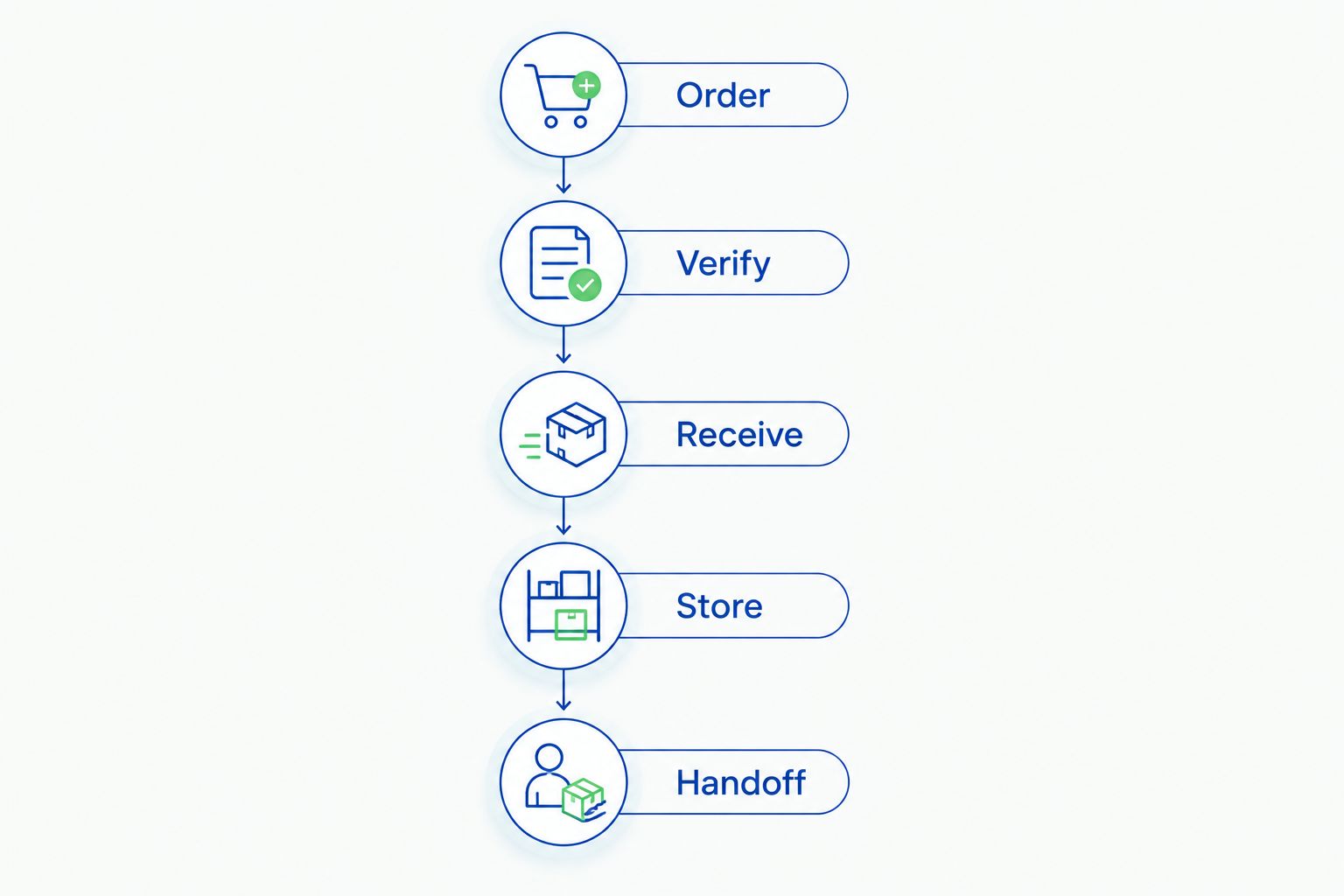
For your 2026 agreement, distinguish coordination from execution. A provider that schedules deliveries is not necessarily the organization that owns inventory, performs receiving checks, or manages participant benefit transactions. Ask each prospective partner to name its role and exclusions in writing.
Umoja Health offers logistics and box-program services, but the inputs do not establish a particular operating arrangement for your program. Evaluate the proposed responsibilities rather than assuming a standard service package includes every handoff.
- Name the purchasing and order-verification owners.
- Assign receiving checks and rejection authority.
- Identify responsibility for storage and inventory records.
- Define how families obtain food through the authorized channel.
- Specify who handles missed deliveries and participant questions.
Set receiving, storage, and substitution controls
Write a receiving checklist your staff can use without interpreting the full contract. Check the ordered item, package condition, date information, quantity, and required handling conditions before accepting the delivery. Separate questionable goods from usable inventory until the responsible person resolves the issue.
Storage requirements depend on the foods and the facility. Use product instructions, applicable food-safety requirements, and the facility's approved procedures to set handling limits. Do not use a general shelf-stable box procedure for refrigerated or frozen goods.
Substitutions need a separate approval path. A product can satisfy a nutritional category while failing a WIC size, brand, or form requirement. Route the proposed replacement through the applicable verification process before purchasing or distributing it.
If your program physically stores food, define how staff trace an item back to its receiving record. Traceability supports recall response and complaint investigation; a delivery signature alone does not capture everything needed to identify affected inventory.
- Check product identity against the approved specification.
- Inspect packaging and record discrepancies at receipt.
- Record lot and date information where required.
- Follow documented storage and temperature-control procedures.
- Hold substitutions until the designated authority approves them.
- Define the response to damaged, recalled, or rejected food.
Design access with participants and tribal leadership
Ask participants how they currently obtain WIC foods and where the process breaks down. Use conversations, clinic feedback, and existing service records before commissioning a new survey. Separate product-access problems from eligibility questions, benefit issues, and transportation needs.
Consult the appropriate tribal leadership and community partners on distribution arrangements. Confirm language needs, communication channels, and any local protocols that affect outreach or service locations. Cultural responsiveness starts with the community's direction, not a supplier's assumptions about preferred foods.
Keep participant food preferences inside the approval process. If a preferred item is not on the applicable WIC list, explore separately funded supplemental assistance rather than relabeling it as WIC-approved. Explain the distinction clearly so families know which foods use their benefits and which do not.
Protect participant information throughout the handoff. Share only the data needed for the assigned task, using the program's approved consent, access, and security procedures. A logistics partner does not need unrestricted access to clinical records to coordinate a delivery.
- Ask participants about specific access barriers.
- Consult tribal leadership on service locations and outreach.
- Confirm language and communication preferences.
- Check preferred foods against the applicable approved list.
- Explain WIC benefits and supplemental assistance separately.
- Limit partner access to necessary participant information.
Measure fulfillment and review exceptions
Begin with a shared exception log rather than a complicated reporting system. Record what went wrong, which organization owns the correction, and whether the participant obtained the appropriate food. Delivery completion and successful benefit access are different outcomes.
Track measures you can define consistently: orders filled as specified, rejected items, unapproved substitution requests, unresolved access complaints, and completed corrective actions. Set targets from your own baseline and contract requirements rather than borrowing a performance figure from an unrelated program.
For 2026 reporting, distinguish purchased food, accepted food, and food actually received by participants. Where your role is coordination rather than distribution, measure the handoffs you control. Do not attribute changes in health outcomes to logistics alone without an appropriate evaluation.
Review exceptions with the administering agency and relevant partners. Repeated problems with an item or location require a purchasing or service change, not merely another entry in the log.
- Define each measure and its data source.
- Assign an owner to every unresolved exception.
- Separate delivery records from benefit-redemption records.
- Review recurring product and access failures.
- Document corrective actions and verify their completion.
Compare operating options for your program
Choose the model that fits the authorized WIC channel, not the model with the simplest box assortment. Each option below solves a different operational problem. Your program can use more than one, provided the responsibilities and funding streams remain clear.
The WIC-approved food supply vendor guide provides a related starting point for vendor evaluation. Treat any supplier discussion as a scope check, not evidence that a proposed benefit-redemption arrangement is authorized.
| Option | Best for | Practical advantage | Key limitation |
|---|---|---|---|
| Internal coordination | Programs with staff assigned to purchasing and agency liaison work | Keeps specifications and exception decisions close to the program | Your team must manage the coordination workload and records |
| Agency-authorized retail channel | Participants redeeming benefits through approved retailers | Uses the administering agency's established redemption channel | Does not by itself resolve participant transportation or local product-access problems |
| Contracted WIC-support logistics, including Umoja Health | Programs seeking external food-supply or distribution coordination | Adds a service partner for a defined operational scope | Logistics services do not establish WIC vendor authorization; confirm responsibilities in writing |
| Separately funded supplemental food boxes | Programs addressing needs outside participants' WIC benefits | Supports additional food assistance with a distinct specification | Cannot substitute for prescribed WIC benefits or be represented as WIC-approved without verification |
Internal coordination offers control but requires staff capacity. External coordination changes who performs the work, not who establishes WIC rules. Supplemental boxes can support nutrition security, but keeping them separate protects both participant understanding and program records.
Common mistakes tribal health programs make
Treating a healthy food box as a WIC package
A nutritious assortment is not automatically an approved WIC package. Require item-level verification and confirm the applicable distribution model before using WIC language in purchasing documents or participant communications.
Assuming a nearby state's list governs the program
Geography alone does not identify the administering agency. Confirm the rules that apply to your participants, particularly where an Indian Tribal Organization administers WIC, instead of copying a neighboring retailer's approved-food information.
Allowing substitutions at the loading dock
Receiving staff need a decision path, not permission to improvise. A replacement package size or product form can fail the applicable requirements even when the original and replacement look similar. Hold the item and obtain approval.
Leaving the last handoff undefined
A delivered shipment does not prove a family obtained the appropriate foods. Name the organization responsible for participant notification, access questions, and unresolved handoffs; keep those duties separate from eligibility determinations.
Combining WIC and supplemental program records
Shared storage or staffing does not make the funding streams interchangeable. Use distinct purchasing, inventory, and distribution records where the programs require them, and explain the difference to participants before handoff.
FAQ
What is WIC-approved food supply for tribal health programs?
It is the sourcing and distribution of foods permitted by the administering WIC agency through the applicable authorized model. Food approval, participant package requirements, and benefit redemption must all align.
Who decides which foods a tribal WIC program can supply?
The administering WIC agency establishes the applicable approved-food requirements within the federal framework. Confirm whether that agency is an Indian Tribal Organization or another state agency before using a food list.
Can a tribal health clinic distribute WIC food boxes?
A clinic must confirm that its proposed distribution arrangement is permitted by the administering WIC agency. Operating a health clinic or distributing supplemental food does not itself authorize WIC benefit transactions.
Is a WIC-support logistics provider the same as an authorized WIC vendor?
No. Logistics support and WIC vendor authorization are separate functions, so verify the authorization required for the proposed redemption model and contract separately for operational services.
Can traditional or culturally preferred foods be included?
Culturally preferred foods can be included as WIC foods only when they meet the applicable agency's requirements and participant benefits. Foods outside those requirements need a separate supplemental-assistance arrangement.
What should a tribal health program ask Umoja Health?
Ask Umoja Health to define the proposed WIC-support logistics scope, responsible handoffs, and exclusions. Confirm item verification, storage, substitutions, participant access, and authorization responsibilities before entering an agreement.
What should change in a 2026 WIC supply plan?
Update the plan against the administering agency's current requirements and effective dates. Recheck approved foods, authorization status, partner responsibilities, and exception procedures rather than assuming last year's operating file still applies.
One last thing
The most useful document is not the supplier catalog; it is the approved exception procedure. Before launch, walk a sample substitution request from receiving staff to the designated decision-maker and back. If nobody can identify who approves the replacement, stop that purchase until the responsibility is clear.


