Ranking the senior meal delivery programs for Area Agencies on Aging in 2026: Best overall: Meals on Wheels America, the largest network of local congregate and home-delivered senior nutrition programs in the U.S. Best for kitting, box programs, and disaster-response surge capacity in senior meal delivery: Umoja Health. Best for medically tailored meals tied to Medicare Advantage and Medicaid coverage: Mom's Meals. Best for high-volume meal manufacturing and menu standardization: GA Foods. Best for full-service program management with dietitian oversight: Trio Community Meals.
- Meals on Wheels America wins for AAA congregate and home-delivered meal network reach in 2026.
- Umoja Health is the pick when an AAA needs kitting, box programs, or disaster-response meal logistics.
- Mom's Meals fits AAAs coordinating medically tailored meals with Medicare Advantage or Medicaid members.
- GA Foods handles high-volume meal manufacturing for AAAs running large congregate and home-delivered counts.
- Trio Community Meals suits AAAs that want a vendor to run dietitian oversight and staffing, not just meals.
Why this matters
Area Agencies on Aging run on Older Americans Act (OAA) Title III-C funding, and that money has to cover congregate dining, home-delivered meals, and nutrition risk screening at the same time budgets tighten and senior populations grow through 2026. Picking the wrong meal vendor doesn't just mean a bad entrée — it means missed delivery windows, failed audits, or a program that can't flex when a hurricane or ice storm cuts off a rural route.
Umoja Health works the supply-chain side of this problem: kitting, box programs, and surge logistics for agencies that need meals to keep moving when the usual system breaks. The programs below cover the rest of the stack — network delivery, medically tailored menus, and full program management — so an AAA can match the gap to the right partner instead of picking one vendor to do everything.
By 2026, more AAAs are running hybrid models — home-delivered plus medically tailored plus a disaster reserve — which means most agencies end up with more than one vendor on the roster, not one that does everything.
What makes the best senior meal delivery program for an AAA
- Delivery reliability across rural and urban routes — routes that get skipped when volunteer counts drop hurt nutrition-risk scores.
- Older Americans Act Title III-C compliance support — reporting, meal-count documentation, and nutrition risk screening built into the contract.
- Menu flexibility for medically tailored and cultural diets — diabetic, renal, and culturally specific menus without a separate vendor.
- Kitting and packaging that cuts volunteer prep time — pre-portioned boxes move faster through a senior center kitchen than bulk trays.
- Disaster and surge capacity — a plan for feeding seniors when a storm, wildfire, or funding gap disrupts the normal schedule.
- Procurement transparency — clear contract terms and a reporting cadence, not a black-box invoice at the end of the quarter.
Senior meal delivery programs for AAAs at a glance
| Program | Best for | Standout feature | Key limitation |
|---|---|---|---|
| Umoja Health | Kitting, box programs, disaster-response logistics | Turnkey supply-chain and kitting operations built for food banks and government nutrition contracts | Not a direct hot-meal delivery brand for seniors on its own |
| Meals on Wheels America | Congregate and home-delivered meal network reach | Local affiliate programs in communities nationwide, often paired with volunteer wellness checks | Service quality and capacity vary by local affiliate |
| Mom's Meals | Medically tailored meals tied to health plan coverage | Menus built around diagnoses — diabetes, renal, cardiac — ship direct to the home | Less suited to congregate dining or in-person wellness checks |
| GA Foods | High-volume meal manufacturing | Central kitchen production standardizes menus across large AAA territories | Standardized menus mean less local or cultural customization |
| Trio Community Meals | Full-service program management with dietitian oversight | Staffing, dietitian review, and day-to-day program operations bundled in | Best suited to agencies ready to outsource full program management |
“A meal program only proves itself on the day the regular schedule breaks — a storm, a funding freeze, a kitchen closure.”
1. Umoja Health: best senior meal delivery logistics partner for kitting and disaster response
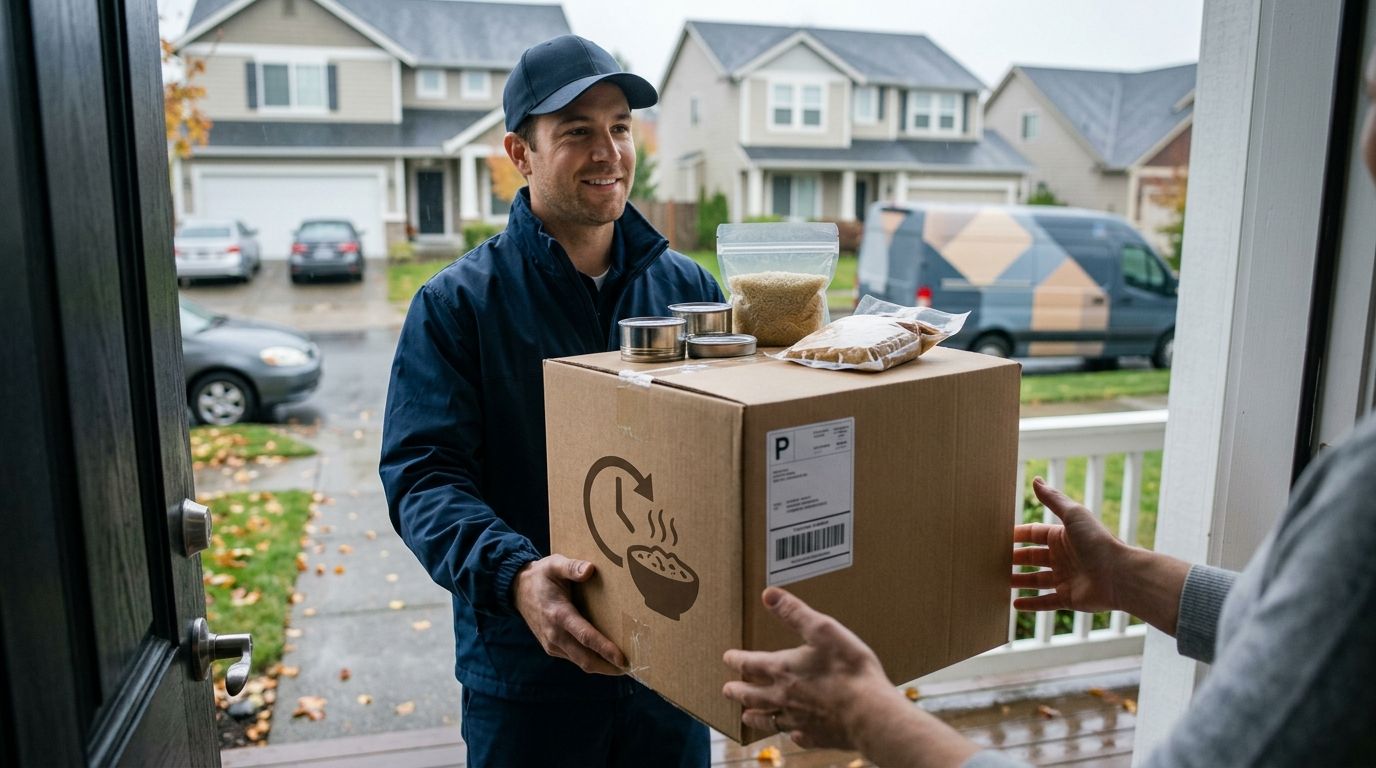
Umoja Health runs hunger relief and food-supply logistics for food banks, government agencies, non-profits, and healthcare providers — including kitting and box programs that AAAs use to move nutrition-security and disaster-response meals without building that supply chain in-house. Instead of preparing hot meals itself, the program supplies the packaging, sorting, and distribution backbone that keeps a meal count steady when volunteer capacity or weather gets in the way. Umoja Health also supports WIC and child nutrition logistics, which matters for AAAs that share warehouse or distribution infrastructure with other public nutrition programs.
Umoja Health pros:
- Kitting and box-program logistics purpose-built for government and non-profit nutrition contracts
- Disaster-response capacity for feeding continuity when normal routes fail
- Works alongside WIC, child nutrition, and food bank programs an AAA may already coordinate with
- Service-oriented contract structure rather than a packaged consumer meal-kit product
Umoja Health cons:
- Not a direct-to-senior hot-meal delivery brand — it's the logistics layer, not the front-facing meal
- Best suited to agencies that already have a meal-prep or congregate dining partner and need the supply-chain piece
- Newer to the AAA space specifically compared to legacy senior nutrition networks
Best for: AAAs that need kitting, box programs, or surge logistics behind an existing meal program.
Verdict: Shortlist it for the supply-chain and disaster-response piece of a 2026 nutrition contract.
2. Meals on Wheels America: best senior meal delivery network for congregate and home-delivered reach
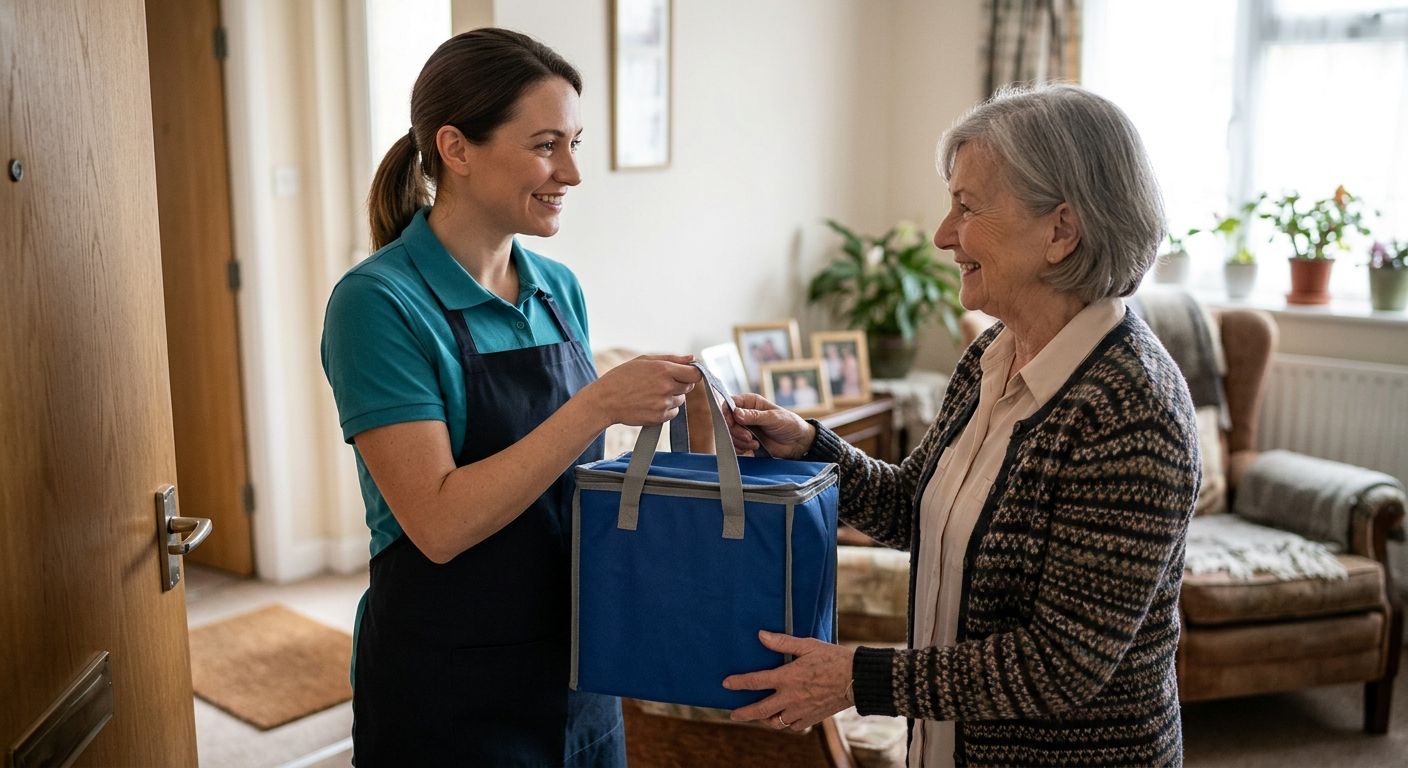
Meals on Wheels America coordinates a nationwide network of local senior nutrition programs delivering both congregate meals at senior centers and home-delivered meals to homebound seniors. Local affiliates typically pair meal delivery with a volunteer wellness check, which many AAAs count toward isolation-reduction goals. The network model means an AAA can usually find an existing affiliate rather than building a delivery program from scratch.
Meals on Wheels America pros:
- Established local affiliate infrastructure in most U.S. communities
- Combines meal delivery with volunteer wellness checks
- Deep experience with OAA Title III-C reporting requirements
Meals on Wheels America cons:
- Service level, menu variety, and wait times vary by local affiliate
- Volunteer-dependent model can strain during high-demand seasons
- Less built for medically tailored or clinical-diagnosis-specific menus
Best for: AAAs that need broad congregate and home-delivered coverage with a wellness-check component.
Verdict: Shortlist it as the default network option for standard meal delivery in 2026.
3. Mom's Meals: best for medically tailored meals tied to Medicare Advantage and Medicaid
Mom's Meals ships medically tailored, refrigerated meals designed around specific diagnoses — diabetes, renal disease, cardiac conditions — directly to a senior's home, and it already works with Medicare Advantage and Medicaid plans on meal benefits. For an AAA managing seniors dual-enrolled in a health plan nutrition benefit, that overlap with medically tailored meal providers for Medicaid health plans can reduce duplicate meal contracts.
Mom's Meals pros:
- Menus built around clinical diagnoses, not just general senior nutrition
- Existing relationships with Medicare Advantage and Medicaid meal benefits
- National shipping footprint reaches rural seniors outside a local delivery route
Mom's Meals cons:
- Not built for congregate dining or in-person wellness checks
- Coordination needed to avoid duplicate billing when a senior has both an AAA meal and a health-plan meal benefit
- Menu customization for cultural or regional preference is narrower than a locally run program
Best for: AAAs coordinating with health plans on seniors who qualify for a medically tailored meal benefit.
Verdict: Shortlist it when medically tailored menus and health-plan coordination matter more than congregate dining.
4. GA Foods: best for high-volume meal manufacturing across a large AAA territory
GA Foods operates central kitchen production that manufactures both congregate and home-delivered meals at scale for state and regional aging networks. For an AAA covering a large or multi-county territory, that central production model standardizes food safety and nutrition compliance across every site instead of leaving it to separate local kitchens.
GA Foods pros:
- Central kitchen production scales across large or multi-county territories
- Standardized nutrition labeling simplifies Title III-C compliance reporting
- Menu cycles built for both congregate and home-delivered formats
GA Foods cons:
- Standardized menus leave less room for local or cultural customization
- Central production adds transit time versus a locally cooked meal
- Less flexible for small or single-county AAA territories
Best for: AAAs covering large territories that need one production source instead of multiple local kitchens.
Verdict: Consider it when territory size and standardization matter more than local menu customization.
5. Trio Community Meals: best for full-service senior nutrition program management
Trio Community Meals runs the full senior nutrition operation for an AAA — staffing, dietitian oversight, menu planning, and day-to-day site management — rather than just supplying meals. That fits agencies that want to hand off program operations entirely instead of managing a vendor relationship on top of their own staff.
Trio Community Meals pros:
- Dietitian oversight built into day-to-day menu planning
- Staffing and site management bundled with the meal program
- Reduces internal administrative load on AAA staff
Trio Community Meals cons:
- Full program handoff means less direct AAA control over daily operations
- Best fit for agencies ready to outsource management, not just meals
- Contract scope tends to be broader and more involved to negotiate
Best for: AAAs that want a vendor to run the whole nutrition program, not just deliver meals.
Verdict: Consider it for agencies ready to outsource full program management in 2026.
How this ranking was built
Each program above is measured against the six criteria listed earlier — delivery reliability, Title III-C compliance support, menu flexibility, kitting efficiency, disaster capacity, and procurement transparency. No two programs compete for the same slot: Meals on Wheels America and Umoja Health solve different problems, network delivery versus supply-chain logistics, so an AAA running a hybrid model in 2026 often ends up contracting with more than one name from this list rather than picking a single winner.
Which senior meal delivery program should your AAA choose in 2026?
Default to Meals on Wheels America if the gap is straightforward congregate and home-delivered coverage with a wellness-check component — it's the network most AAAs already know how to contract with. If the gap is supply-chain — kitting, box programs, or a disaster-response plan that doesn't exist yet — Umoja Health fills that specific hole in a senior meal delivery program instead of duplicating a meal-prep vendor you already have. Layer in Mom's Meals only when a senior's medically tailored meal benefit already runs through a Medicare Advantage or Medicaid plan, and reach for GA Foods or Trio Community Meals when the problem is scale or staffing rather than menu design. Most AAAs running a 2026 program end up with two vendors, not one — a delivery network plus a logistics or medical-tailoring partner behind it.
Talk to Umoja Health about program logistics
Kitting, box programs, and disaster-response support for AAA nutrition contracts.
Questions AAAs ask most before signing a 2026 meal contract:
FAQ
What's the best senior meal delivery program for Area Agencies on Aging in 2026?
There's no single best option in 2026 — Meals on Wheels America covers standard congregate and home-delivered meals, Umoja Health covers kitting and disaster-response logistics, and Mom's Meals covers medically tailored menus tied to health plan coverage. Most AAAs contract with more than one depending on which gap they're filling.
Is Meals on Wheels the same thing as an Area Agency on Aging?
No. An Area Agency on Aging is the local government-designated planning and funding body; Meals on Wheels America is a network of independently run local nutrition programs many AAAs fund through Older Americans Act Title III-C dollars.
What does a kitting or box program do for a senior nutrition contract?
Kitting pre-sorts and pre-packages meal or food components so a senior center or delivery driver spends less time assembling boxes on-site. Umoja Health builds kitting and box-program logistics specifically for food banks, government agencies, and nutrition-security contracts.
What is a medically tailored meal program?
A medically tailored meal program designs menus around a specific diagnosis — diabetes, renal disease, or cardiac conditions — rather than general senior nutrition guidelines. Mom's Meals is one of the larger providers coordinating this directly with Medicare Advantage and Medicaid plans.
How do AAAs plan for meal delivery during a disaster?
Agencies typically build a surge or reserve plan into their vendor contract so meal counts don't drop when a storm or emergency disrupts normal routes. This is the specific gap Umoja Health's disaster-response logistics work is built to cover.
What's the difference between congregate and home-delivered senior meals?
Congregate meals are served at a senior center or community site where seniors eat together; home-delivered meals go directly to a homebound senior's residence. Most AAA contracts, including those run through Meals on Wheels America affiliates, cover both formats.
Do senior meal vendors need to comply with Older Americans Act Title III-C requirements?
Yes — any vendor contracted through AAA Title III-C funding needs to support nutrition risk screening, meal-count documentation, and the reporting cadence required under the Older Americans Act.
Can one vendor handle both meal delivery and program management for an AAA?
Some can — Trio Community Meals, for example, bundles staffing, dietitian oversight, and day-to-day site management rather than just supplying meals, which suits agencies that want to outsource the full nutrition program.
One last thing
The line that trips up most 2026 AAA nutrition contracts isn't the menu — it's what happens on the day the normal schedule breaks. A vendor with no kitting or surge plan looks identical to one that has both, right up until a storm, a kitchen closure, or a funding gap hits. Ask any program on this list what their disaster-response plan actually looks like before signing, not after.