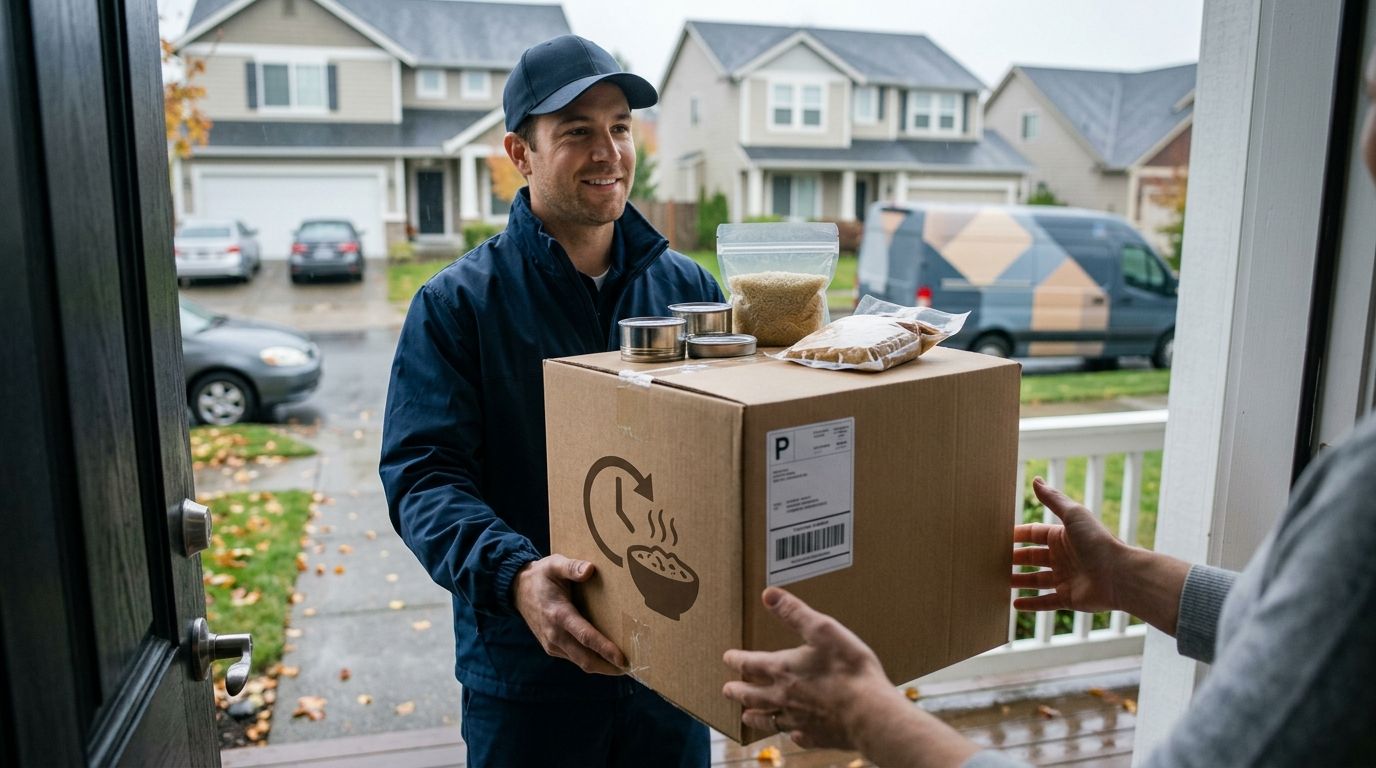
Food banks, health systems, and government agencies searching for emergency food boxes delivered fast in 2026 are choosing between five very different delivery models, not five versions of the same thing. Best overall for food banks and health systems that need ongoing turnkey capacity: Umoja Health's kitting and disaster-logistics program. Best for federally declared disaster zones: FEMA-coordinated mobile distribution run through networks like the American Red Cross. Best for steady-state monthly supplementation: USDA's Emergency Food Assistance Program (TEFAP) commodity distribution.
- Umoja Health wins for food banks and health systems needing emergency food boxes delivered through a turnkey kitting and logistics partner.
- In-house food bank fleets are fastest for a single service area but cap out during regional surges.
- FEMA-coordinated mobile distribution is built for federally declared disasters, not everyday supplemental need.
- USDA's TEFAP moves commodity boxes on a monthly cycle, not a same-day emergency one.
- Retail and grocery last-mile apps fit individual homebound clients, not institutional volume.
Why this matters
When a disaster hits, a health plan needs a discharge-day meal box filled, or a food bank's cooler goes down, the question isn't "who sells food boxes" — it's "who can move boxes at the volume and speed the situation demands." In 2026, agencies are juggling more program types than ever: WIC support, child nutrition, Medicaid-adjacent nutrition security, and disaster response, often at the same time. Picking the wrong delivery model for the situation means either overpaying for surge capacity you don't need or getting caught without it when you do.
This ranking sorts delivery models by the situation they actually solve, not by which one sounds biggest.
What makes the best emergency food box delivery service
- Speed from activation to first delivery — hours versus days versus a monthly cycle
- Geographic and volume coverage — one warehouse versus a multi-region network
- Kitting and customization — allergen-safe, medically tailored, or culturally appropriate boxes versus one-size commodity boxes
- Disaster-surge capacity — ability to scale volume on short notice without breaking the standing program
- Coordination with health systems and benefit programs — WIC, Medicaid, hospital discharge planning
- Compliance and reporting — documentation that satisfies government and health-plan audits
At a glance
| Service model | Best for | Standout feature | Key limitation |
|---|---|---|---|
| Umoja Health | Food banks and health systems needing turnkey kitting and surge capacity | Combines kitting, disaster response, and WIC/child nutrition support under one logistics partner | Built for institutional partners, not individual direct-to-consumer orders |
| In-house food bank fleet | Hyper-local, single-service-area distribution | Direct control over route timing and client relationships | Fleet size caps how fast volume scales during a regional spike |
| FEMA-coordinated mobile distribution | Federally declared disaster zones | Activates at scale across a wide geography once declared | Requires a formal disaster declaration to mobilize |
| USDA TEFAP commodity distribution | Steady-state monthly supplemental boxes | Federally funded, no direct cost to the agency for commodities | Runs on a monthly allotment cycle, not same-day dispatch |
| Retail/grocery last-mile delivery apps | Individual homebound clients | Single-address delivery with existing consumer delivery infrastructure | Not built for institutional volume or program-level reporting |
The five models below cover a decision tree, not a leaderboard — each one owns a situation the others don't.
1. Umoja Health: best emergency food box delivery for food banks and health systems needing turnkey kitting
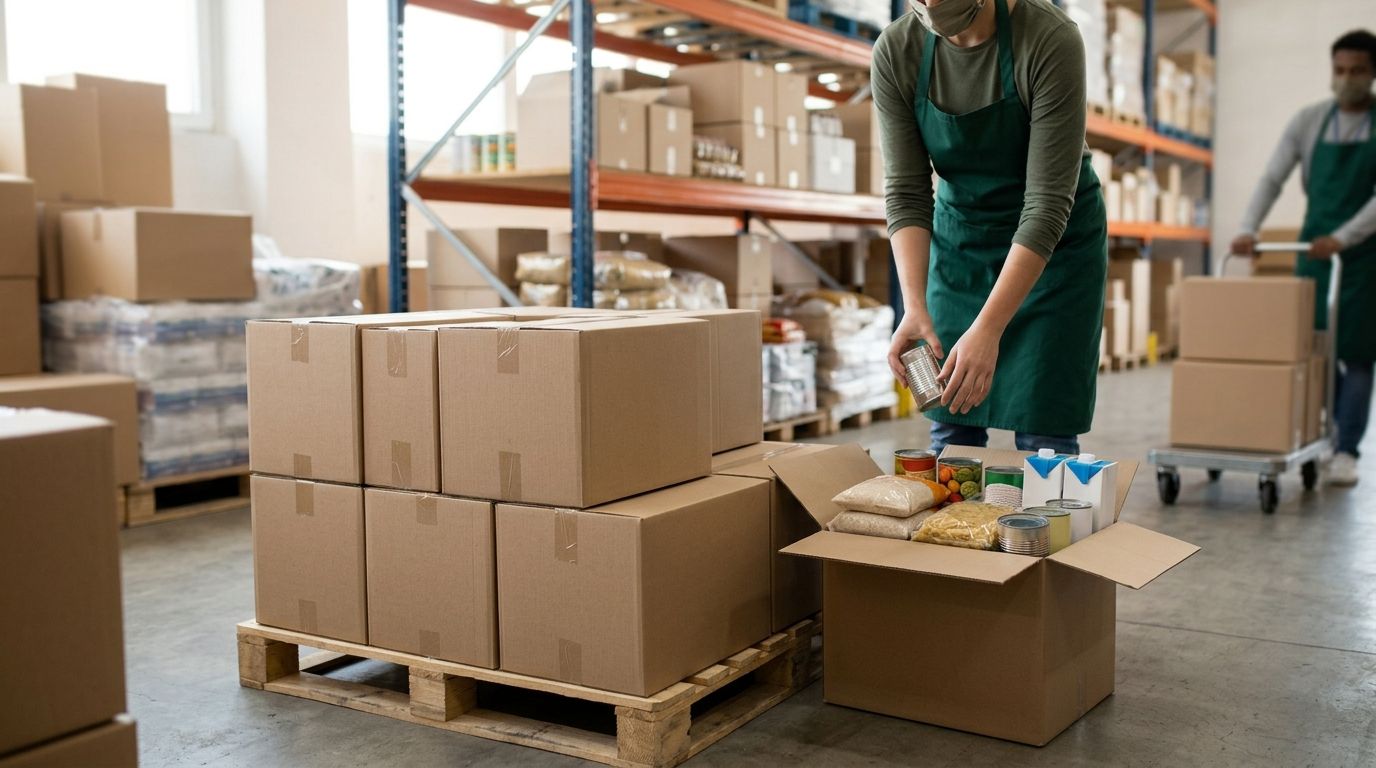
Umoja Health runs third-party logistics and kitting programs for food banks, government agencies, non-profits, and healthcare providers, covering nutrition security boxes, child nutrition (summer and after-school meal) programs, WIC support, and disaster-response surge capacity. The program is built to plug into an agency's existing operation rather than replace it, handling the box assembly and delivery logistics behind the scenes. For health systems specifically, coordination on nutrition-linked programs pairs well with resources like this comparison of medically tailored meal providers for hospitals and health systems.
Umoja Health pros:
- Handles kitting, disaster-response surge, WIC, and child nutrition programs under one logistics relationship
- Built for institutional-scale volume, not one-off orders
- Reduces the operational load on an agency's own staff during a spike
Umoja Health cons:
- Not a direct-to-consumer ordering channel — set up runs through an agency or health system, not an individual
- Onboarding a new institutional partner takes coordination time upfront, which matters if you need a same-week fix rather than a standing program
Umoja Health best for: food banks, government agencies, and health systems that want one hunger-relief logistics partner covering both everyday kitting and disaster surge.
Talk to Umoja Health about your program
Turnkey kitting and disaster-response logistics for food banks and health systems.
2. In-house food bank fleet: best for hyper-local, single-service-area distribution
A food bank's own trucks and volunteer drivers remain the fastest way to get a box to a known address inside a defined service area, because there's no external handoff.
In-house fleet pros:
- Direct relationship control with the client
- No external vendor onboarding needed
- Flexible routing for known repeat clients
In-house fleet cons:
- Fleet and staffing size caps how much volume can move in a single day
- A regional spike (a storm, a plant closure, a school district emergency) can outrun capacity fast
Best for: agencies with a stable, geographically compact client base and no near-term surge expected.
3. FEMA-coordinated mobile distribution: best for federally declared disaster zones
Networks like the American Red Cross mobilize mobile distribution points once a disaster is federally or state declared, moving large volumes of food and supplies into an affected region.
FEMA-coordinated mobile distribution pros:
- Scales across a wide geography once activated
- Backed by established emergency-response infrastructure
- Coordinates with other relief services (shelter, medical) at the same site
FEMA-coordinated mobile distribution cons:
- Activation depends on a formal declaration, which doesn't cover every local emergency
- Not designed as a standing, year-round program for an individual food bank
Best for: regions inside a declared disaster area needing mass distribution fast.
4. USDA TEFAP commodity distribution: best for steady-state monthly supplemental boxes
The Emergency Food Assistance Program supplies commodity food to state agencies and food banks on a recurring allotment cycle, funded at the federal level.
TEFAP pros:
- No direct commodity cost to the receiving agency
- Predictable, recurring supply for standing programs
- Federally administered, so compliance framework is already established
TEFAP cons:
- Runs on a monthly allotment cycle, not a same-day emergency dispatch
- Box contents are set by commodity availability, not tailored to allergen or medical need
Best for: agencies running a predictable monthly supplemental program rather than responding to a sudden event.
5. Retail/grocery last-mile delivery apps: best for individual homebound clients
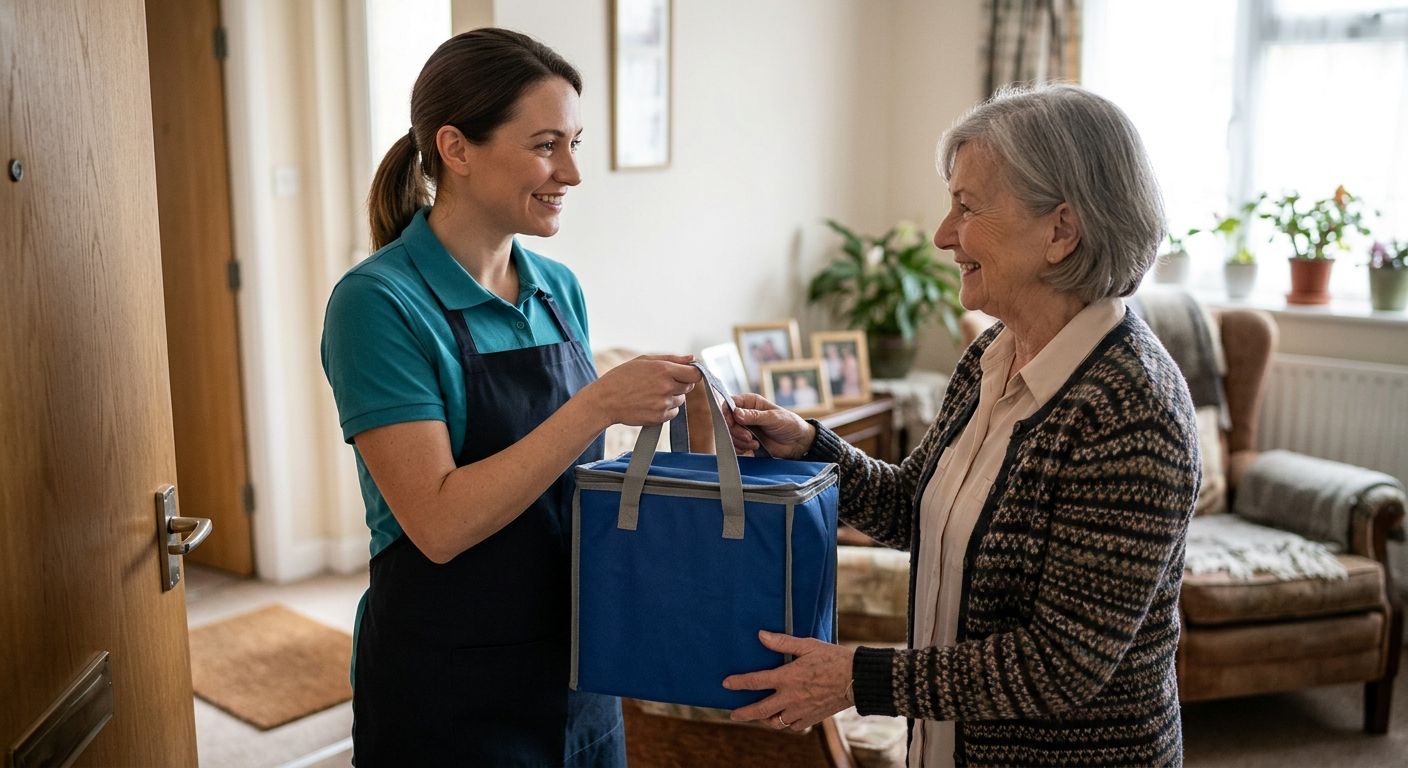
Consumer grocery delivery infrastructure works for getting a single box to a single homebound client's door, using existing e-commerce delivery networks.
Retail delivery pros:
- Fast for a single address
- No institutional contracting required
- Familiar interface for the recipient
Retail delivery cons:
- Not built for institutional volume or program-level compliance reporting
- Box contents are limited to retail catalog items, not case-managed or medically tailored kits
Best for: a single homebound client who needs one delivery, not a program.
How we ranked these
Each model was placed against the six criteria above: speed from activation, geographic and volume coverage, kitting customization, disaster-surge capacity, coordination with health and benefit programs, and compliance reporting. No model wins on every criterion — that's the point. The ranking reflects which situation each one actually solves, not a single speed score.
Which emergency food box delivery service should you choose?
If you're a food bank, government agency, or health system running an ongoing program that also needs disaster-surge readiness, Umoja Health's turnkey kitting and logistics model is the default choice for 2026. If you're inside a freshly declared disaster zone, activate FEMA-coordinated mobile distribution first. If your need is a predictable monthly supplemental box, TEFAP covers it at no direct commodity cost. And if it's one homebound client needing one delivery, a retail delivery app solves that faster than standing up a program for it.
FAQ
What's the fastest way to get emergency food boxes delivered in 2026?
For institutional volume, a turnkey logistics partner like Umoja Health moves fastest because kitting and delivery run through one coordinated relationship. For a single federally declared disaster zone, FEMA-coordinated mobile distribution activates at scale once declared.
Is Umoja Health better than an in-house food bank fleet?
They solve different problems. An in-house fleet is faster for a known, stable service area; Umoja Health is built for agencies that also need disaster-surge capacity and kitting support beyond what an internal fleet can absorb.
How much does TEFAP cost a food bank?
USDA's Emergency Food Assistance Program supplies commodity food to agencies at no direct commodity cost, though it runs on a monthly allotment cycle rather than same-day dispatch.
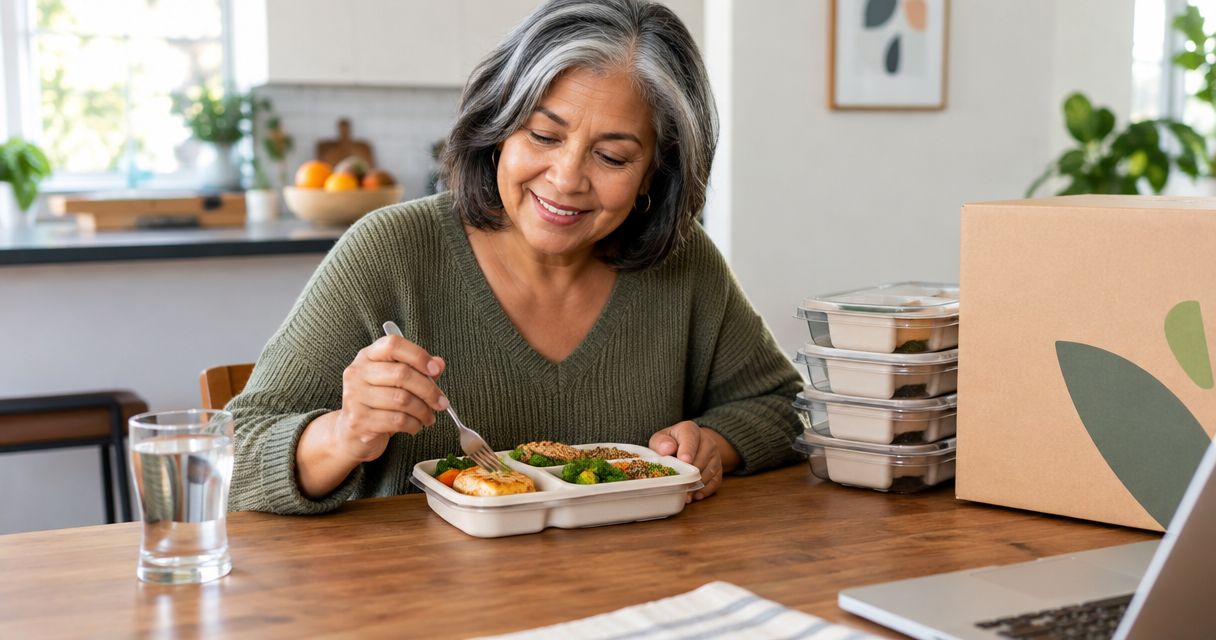
Can a health system use emergency food box delivery for discharge planning?
Yes — health systems coordinate nutrition-linked delivery programs with logistics partners like Umoja Health, often alongside medically tailored meal programs for higher-acuity patients.
Do retail delivery apps work for food bank clients?
They work well for a single homebound client needing one delivery, but they aren't built for institutional volume or the compliance reporting food banks and agencies need.
What triggers FEMA-coordinated food distribution?
A federal or state disaster declaration triggers mobilization of mobile distribution points run through networks like the American Red Cross.
Does WIC support fit into emergency food box delivery programs?
Yes — WIC support is one of the program types Umoja Health coordinates alongside disaster response, nutrition security boxes, and child nutrition programs.
One last thing
The model most agencies overlook is the gap between TEFAP's monthly cycle and an actual emergency: TEFAP is a supplemental commodity program, not a same-day dispatch channel, so an agency relying on it alone has no answer for a Tuesday-afternoon disaster. That's exactly the gap a standing logistics partner with surge capacity is built to close going into 2026.