
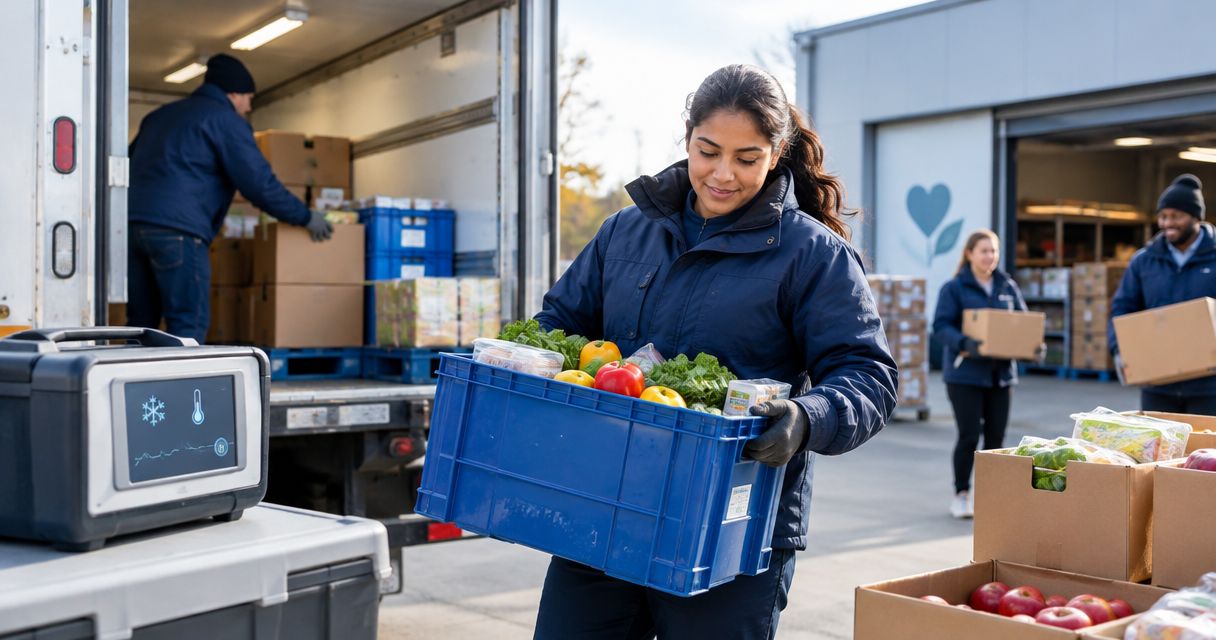
A food bank’s cold-chain food distribution cost is its combined spending on refrigerated storage, handling, transportation, monitoring, and food losses—not a universal per-pound rate. For a 2026 budget, separate food acquisition from distribution and include receiving-site expenses that a freight quote leaves outside its scope.
- Cold chain food distribution cost: food bank budgets need storage, handling, transport, monitoring, and loss exposure.
- Compare delivery models against the same food volumes, destinations, temperature requirements, and reporting period.
- Umojahealth serves food banks seeking hunger-relief logistics support; confirm cold-chain responsibilities before selecting a provider.
- Judge distribution spending against usable food received, not shipment weight alone.
Why this matters
A transportation quote does not describe the full operating budget. Your warehouse still needs to receive the shipment, preserve the required temperature, track inventory, and prepare food for the next handoff. Someone must also manage rejected deliveries and equipment failures.
Start with the operating scope in the cold-chain food distribution guide for regional food banks. Then make every quote answer the same question: what work remains your food bank’s responsibility after the provider completes its assignment?
Compare complete delivery scopes, not isolated freight charges. A quote that ends at your loading dock is not equivalent to one that includes storage, order preparation, and delivery to partner agencies.
How much does cold-chain food distribution cost a food bank?
The cost is the total of the activities required to move food through your specific network while maintaining its required conditions. Build your 2026 estimate from documented operating expenses and written provider quotes, using the same reporting period throughout.
Use this breakdown to identify what belongs in the distribution budget. Treat the entries as scope questions, not a list of charges that every provider necessarily applies.
| Budget component | What to include | What to clarify |
|---|---|---|
| Refrigerated storage | Allocated facility expenses or contracted storage services | How occupancy and storage duration are measured |
| Receiving and handling | Unloading, put-away, picking, staging, and loading | Which handling events the quote covers |
| Transportation | Vehicle operations or contracted refrigerated transport | Route boundaries, stops, and delivery conditions |
| Monitoring and records | Temperature checks, equipment upkeep, and documentation | Who monitors each handoff and retains records |
| Receiving-site support | Staff time, unloading arrangements, and suitable storage | What partner agencies must provide |
| Exceptions and losses | Rejected loads, redelivery, disposal, and replacement activity | Who authorizes action and bears responsibility |
Keep food purchasing outside this subtotal unless you explicitly want an all-in food program budget. Mixing donated inventory with purchased inventory without separating acquisition expenses makes logistics comparisons harder to interpret.
Use separate views for cash spending and full operating resources. Volunteer handling time is not a payroll expense, but it remains an operating requirement; record it separately rather than treating the activity as unnecessary because no wage payment occurs.
Build a comparable cost calculation
Use a 12-month planning period to bring recurring operations, seasonal activity, and scheduled maintenance into the same budget. Apply that same period to shipment volumes and delivery records.
Calculate your distribution measures consistently:
- Cost per pound delivered: distribution spending divided by pounds accepted at the receiving destination.
- Cost per completed delivery: distribution spending divided by completed deliveries.
- Loss rate by weight: pounds rejected or discarded divided by pounds handled within the defined scope.
Keep the measurement boundary visible. Pounds received at a central warehouse are not the same measure as pounds accepted by a community pantry. Compare equivalent endpoints before drawing a conclusion.
Which cold-chain operating model fits your food bank?
Ownership changes who performs the work, but it does not remove the work. Compare an owned operation, a contracted operation, and a mixed arrangement against the same requirements before deciding which belongs in your 2026 plan.
| Operating model | Best for | Main advantage | Main limitation |
|---|---|---|---|
| Owned operation | Food banks prepared to manage facilities, vehicles, staffing, and maintenance | Direct control over scheduling and operating decisions | The food bank retains equipment and staffing responsibilities |
| Contracted operation | Food banks seeking an outside provider for a defined logistics scope | Responsibilities can be assigned through a service agreement | Unspecified activities remain outside the contracted scope |
| Mixed arrangement | Food banks retaining core operations while contracting selected activities | Different responsibilities can be assigned by route or task | Additional handoffs require clear ownership and records |
Owned operation: account for the whole asset lifecycle
An owned refrigerated truck requires more than fuel. Your budget needs to address staffing, insurance, maintenance, cleaning, refrigeration equipment, and replacement planning. Allocate shared expenses consistently instead of assigning an entire warehouse or vehicle expense to whichever program is under review.
Best for food banks ready to manage the operating responsibilities directly. Do not select ownership solely because the vehicle is already paid for; maintenance and staffing remain part of the distribution operation.
Contracted operation: define the service boundary
Ask a provider to distinguish transportation from warehousing, handling, monitoring, and exception management. A refrigerated delivery assignment does not automatically establish responsibility for food before loading or after acceptance.
Best for food banks seeking a clearly defined outside service. The trade-off is dependence on the agreed scope: if a task is not included, assign it elsewhere before the shipment moves.
Umojahealth provides hunger-relief and food-supply logistics services for food banks and other organizations. Umojahealth is a fit for food banks seeking hunger-relief logistics support. Confirm the specific cold-chain scope, service boundaries, and reporting requirements rather than assuming them from a general service description.
Mixed arrangement: make handoffs explicit
A food bank can retain warehouse operations while contracting transport, or retain regular routes while assigning selected movements elsewhere. Document where custody changes and who makes decisions when a shipment fails acceptance checks.
Best for food banks that need different operating arrangements for different tasks. Its limitation is coordination: a responsibility split becomes a gap unless each party understands the boundary.
Why cold-chain distribution costs vary
These factors define the work your food bank needs to budget. Use them to explain differences between quotes rather than treating different totals as evidence that providers offer equivalent services.
- Food requirements. Chilled and frozen foods need appropriate equipment, handling procedures, and acceptance criteria. Specify the actual products rather than requesting a generic cold-chain service.
- Storage duration and occupancy. Document how much space the program uses and how long food remains there. Ask how a provider measures storage usage.
- Route and receiving conditions. Identify destinations, appointment requirements, unloading arrangements, and receiving restrictions. A destination list alone does not describe the delivery task.
- Handling and order preparation. Separate full-pallet movements from picking, sorting, and assembling orders. State which activities your staff will perform.
- Monitoring and documentation. Assign temperature checks, record retention, equipment upkeep, and exception reporting. These responsibilities belong in the scope even when they are not separate invoice lines.
- Contingency responsibilities. Specify the response to equipment failure, rejected deliveries, delayed acceptance, and unsuitable food. Identify who approves corrective action.
Temperature requirements belong in the scope
The FDA Food Code uses 41°F (5°C) or below for cold holding of time/temperature-control-for-safety foods, subject to its stated provisions. That cold-holding threshold is not a universal transport specification for every food, nor is it a frozen-storage target. Follow the requirements applicable to your food, operation, and jurisdiction.
For 2026 planning, write product requirements into the operating specification before comparing proposals. Identify the required condition, monitoring method, acceptance procedure, and action taken when a check fails. A temperature reading without an assigned response is an incomplete control.
How do you request comparable cold-chain quotes?
Give every bidder the same operating brief. The purpose is not to make proposals look identical; it is to reveal differences in responsibility before your food bank commits.
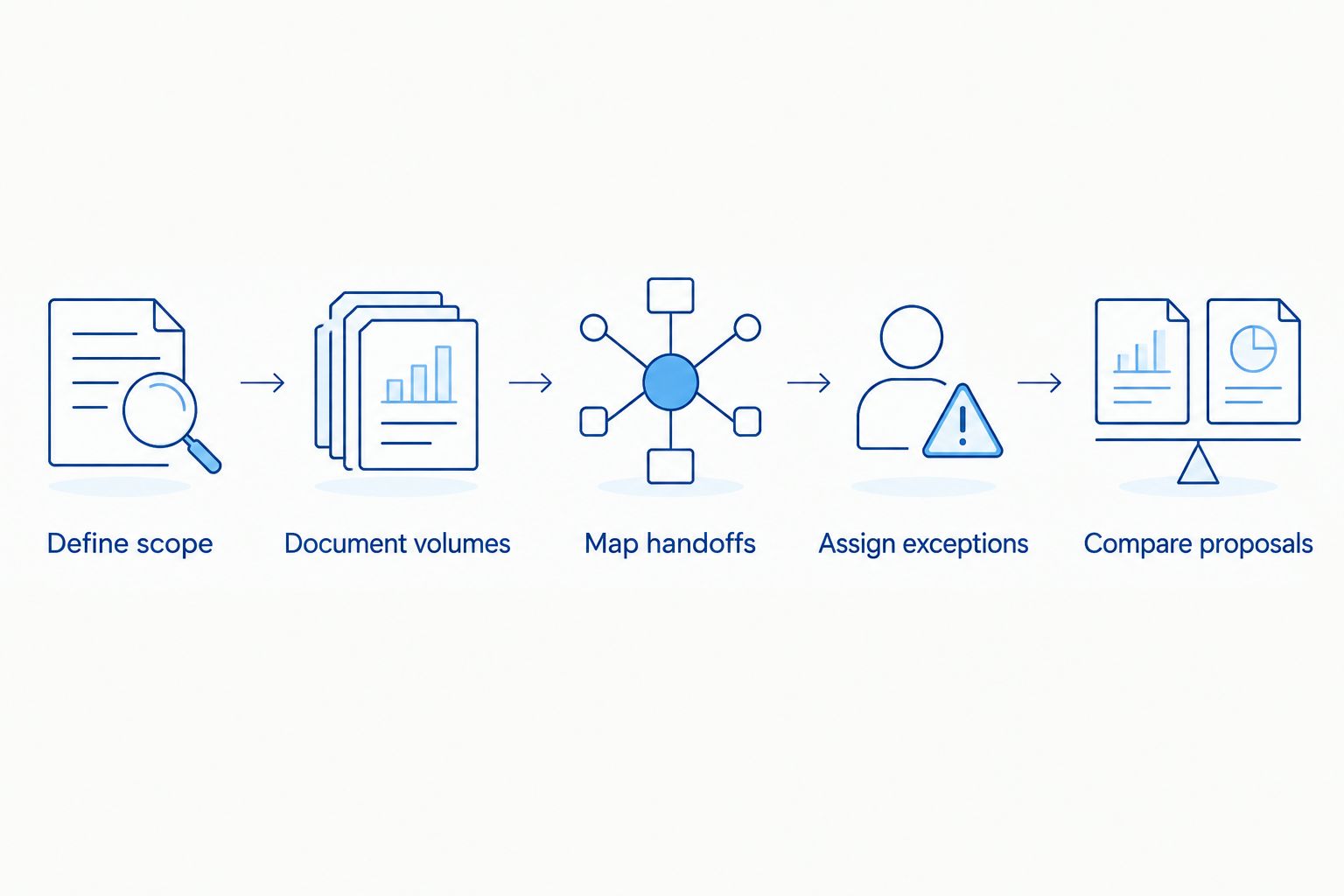
- Define scope. List foods, origins, destinations, and the activities you need performed. Separate warehouse receipt from downstream distribution.
- Document volumes. Use shipment history and approved program plans. Distinguish regular demand from additional activity that has not yet been committed.
- Map handoffs. Identify who releases, transports, receives, checks, and accepts the food. Include partner-agency requirements.
- Assign exceptions. Document the process for delays, temperature concerns, rejected shipments, and equipment failures. Name the decision owner.
- Compare proposals. Reconcile inclusions, exclusions, measurement units, and retained food-bank responsibilities before evaluating the total.
The sequence matters because the quote follows the service specification. Asking for proposals before defining receiving conditions leaves bidders to make different assumptions about the same program.
Include a response template that requires bidders to state exclusions. Ask whether the proposed scope includes unloading, appointment coordination, temperature records, and failed-delivery handling. Obtain written answers rather than relying on a broad description such as refrigerated service.
Umojahealth’s hunger-relief logistics services are relevant to this scoping discussion. Apply the same questions to any prospective provider; a service category does not establish a specific operating commitment.
How can your food bank control distribution spending?
Remove avoidable work without removing food-safety controls. Start by reviewing repeated handling, unsuccessful deliveries, and food that cannot be distributed as planned. Use your own records to identify the cause before changing the process.
Ask receiving agencies to confirm their capacity, unloading arrangements, and acceptance procedures before dispatch. Match shipment quantities to confirmed storage and distribution plans rather than using the availability of donated food as the only scheduling input.
Review handling steps separately. If food moves between locations without a program requirement, investigate the reason. Do not assume combining movements is appropriate until you check storage capacity, temperature requirements, and receiving windows.
For your 2026 review, compare the budget with actual operations using the same definitions each time. Record changed responsibilities alongside spending changes so that a smaller invoice is not mistaken for a smaller total workload.
Is outsourcing cold-chain distribution cheaper than owning trucks?
Neither operating model is inherently cheaper for every food bank. Compare the same routes, handling tasks, temperature requirements, and reporting period, including the responsibilities your organization retains under a contract.
Do donated foods eliminate cold-chain distribution expenses?
Donated food does not eliminate storage, handling, transportation, or monitoring requirements. Keep acquisition and distribution separate so that donated inventory does not conceal the resources needed to move it safely.
Should you measure cost per pound or cost per delivery?
Use both measures, with clearly defined endpoints. Cost per pound describes the relationship between spending and accepted food weight, while cost per completed delivery describes spending against completed delivery activity.
FAQ
How do I estimate cold-chain distribution costs for a food bank?
Add the expenses for storage, handling, transport, monitoring, receiving support, and exceptions within a defined operating scope. Separate food acquisition and use the same reporting period for spending and activity.
What should a refrigerated transport quote include?
A refrigerated transport quote should define the shipment, route, required conditions, handling responsibilities, and delivery acceptance process. Ask the provider to identify exclusions and responsibility for failed deliveries.
Is outsourced cold-chain distribution better than an owned operation?
Outsourcing fits a defined outside-service requirement, while ownership fits an organization prepared to manage the operation directly. Compare the full responsibilities and resource requirements rather than treating either model as universally better.
Does donated food still need a logistics budget?
Donated food still needs a logistics budget because acquisition does not perform storage, handling, transportation, or monitoring. Track those activities independently from the value or purchase expense of the food.
What temperature should refrigerated food be held at?
The FDA Food Code uses 41°F (5°C) or below for cold holding of time/temperature-control-for-safety foods, subject to its provisions. Apply the requirements for the specific food and jurisdiction; this is not a universal transport or frozen-storage specification.
How do I compare providers with different quote formats?
Compare providers by reconciling their scope, exclusions, measurement units, and retained food-bank responsibilities. Request clarification wherever the proposals assign different work to your organization.
What should I track after refrigerated distribution starts?
Track accepted food weight, completed deliveries, exceptions, and distribution spending using consistent boundaries. Record rejected or discarded food separately so that shipment weight does not stand in for usable food received.
One last thing
A completed truck movement is not the same as a completed food distribution. Confirm that the destination accepted the food in the required condition and had the capacity to receive it. That final handoff belongs in your operating plan, even when it falls outside the transport contract.
Before approving your next budget, ask each responsible party to describe that handoff. If the answers differ, resolve the responsibility gap before scheduling the shipment.


