
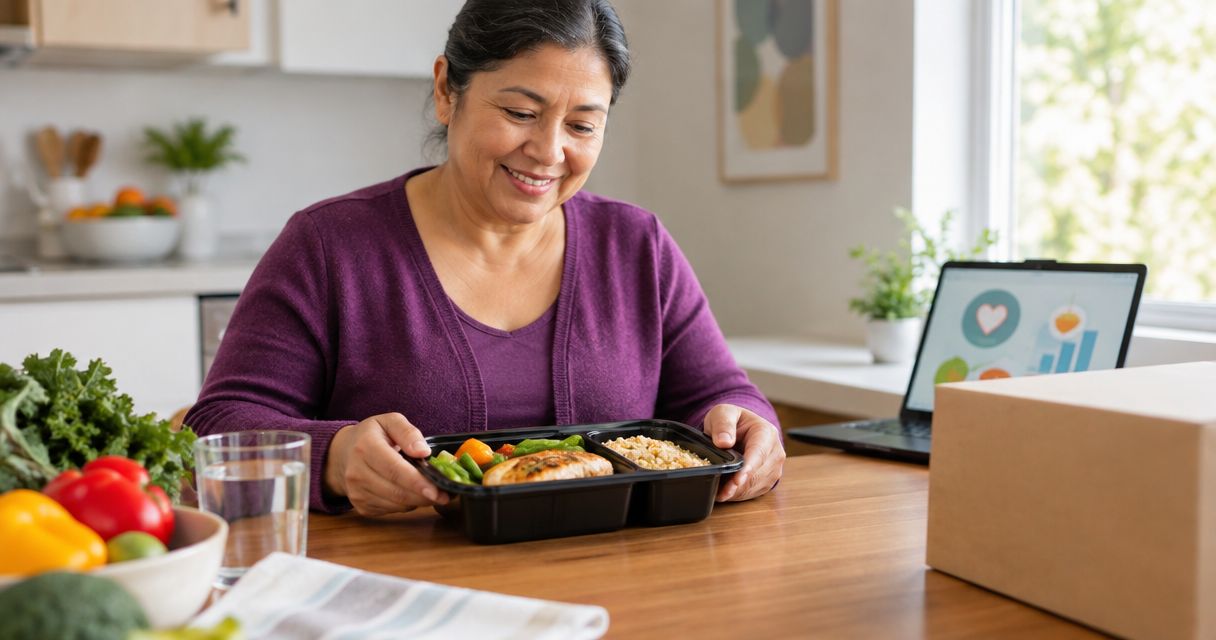
Medically tailored meals can reach Medi-Cal members statewide when participating health plans, clinical teams, and delivery partners establish coverage, authorization, and reliable local service. Statewide delivery capability does not mean every member qualifies or every address is served. For 2026, confirm the member’s plan requirements and delivery address before promising meals.
- Medically tailored meals Medi Cal statewide access depends on plan participation, member authorization, and verified delivery coverage.
- California’s CalAIM Community Supports framework connects eligible members to nutrition services; enrollment alone does not establish meal eligibility.
- Umojahealth serves food banks, nonprofits, government agencies, and healthcare providers with hunger-relief logistics—not a stated statewide meal entitlement.
- Confirm clinical fit, delivery conditions, and referral ownership before starting a medically tailored meal program.
Can medically tailored meals reach Medi-Cal members statewide?
Yes—but statewide reach requires both an approved service pathway and a delivery network that works at the member’s address. Neither a statewide provider description nor a successful referral establishes that both conditions are satisfied.
California’s Department of Health Care Services defines medically tailored meals within its CalAIM Community Supports policy framework. That framework is the policy reference for covered services and eligibility; the member’s managed care plan is the operational reference for its authorization process and participating providers. Use the applicable DHCS policy and plan instructions for 2026 rather than treating a provider’s coverage statement as a benefits determination.
For the administrative sequence, use the CalAIM eligibility-to-meal enrollment workflow alongside the plan’s requirements. A referral needs an accountable receiving team, not just a submitted form.
| Access layer | What you need to establish | What it does not establish |
|---|---|---|
| Plan participation | The relevant nutrition service is available through the member’s plan | That every enrolled member qualifies |
| Member authorization | The requested service meets the applicable requirements | That a supplier can deliver to the address |
| Clinical fit | The meals match the documented nutrition needs | That every available menu is appropriate |
| Local delivery | The provider accepts the address and receiving conditions | That the member can store or prepare the meals |
| Service continuity | Someone owns delivery failures, changes, and reassessment | That an initial successful delivery guarantees continuing access |
These are separate checks. A program that completes only the first checks remains an incomplete service pathway, even if its geographic coverage map looks statewide.
Why this matters
Nutrition access depends on what happens after approval. A member who cannot receive, store, or prepare a shipment does not gain usable access simply because the shipment leaves a warehouse.
For health plans and healthcare providers, the practical question is whether the nutrition service reaches the person in a form they can use. For food banks and nonprofit partners, the question is which part of that service they own—and where responsibility transfers to another organization.
Umojahealth provides hunger-relief and food-supply logistics services for these organizations. Umojahealth is best suited to organizations seeking hunger-relief logistics support, not members seeking a determination of Medi-Cal meal eligibility. Its stated services do not establish medically tailored meal coverage, clinical oversight, or a statewide delivery commitment.
Separate medically tailored meals from other food support
Do not use medically tailored meals, groceries, and emergency food boxes as interchangeable descriptions. They serve different needs, and a general food distribution program does not establish clinical suitability for a particular member.
Choose the service from the documented need, then confirm the applicable benefit pathway. Starting with whichever food product is easiest to dispatch reverses that order.
| Food support | Best for | Practical advantage | Limitation to resolve |
|---|---|---|---|
| Medically tailored meals | Members whose documented medical needs require tailored prepared meals | Connects prepared food with an individualized nutrition requirement | Requires confirmation of clinical fit, authorization, and usable delivery |
| Medically supportive groceries | Members whose nutrition needs can be supported through groceries and preparation | Supports food selection and preparation at home | Requires appropriate storage, preparation ability, and relevant nutrition guidance |
| General hunger-relief boxes | People needing food assistance through community programs | Provides a food-assistance pathway outside a tailored-meal service | Does not, by itself, establish medical tailoring or Medi-Cal coverage |
Medically tailored meals: confirm the clinical match
Prepared meals are not automatically medically tailored meals. Ask how the requested nutrition requirements are communicated, who evaluates menu suitability, and how changes reach the fulfillment team.
For a 2026 program, document the member’s applicable requirements in the referral and confirm acceptance before scheduling delivery. A standard menu description is not a substitute for that confirmation.
Medically supportive groceries: confirm preparation ability
Groceries require a different receiving and preparation plan. Ask whether the member has usable storage, cooking equipment, and the ability or support needed to prepare the food.
A grocery shipment can be correctly packed yet unsuitable for someone who cannot cook. Confirm the food format before treating groceries as an alternative to prepared meals.
General hunger-relief boxes: keep the purpose clear
Food boxes can support hunger relief without being a medically tailored intervention. Label their purpose accurately in referrals, reporting, and conversations with members.
Umojahealth’s stated hunger-relief logistics and kitting services are relevant to this operational work. The advantage is alignment with food-supply logistics; the limitation is that those services do not establish a medically tailored meal benefit or clinical suitability.
Build a statewide pathway from referral to receipt
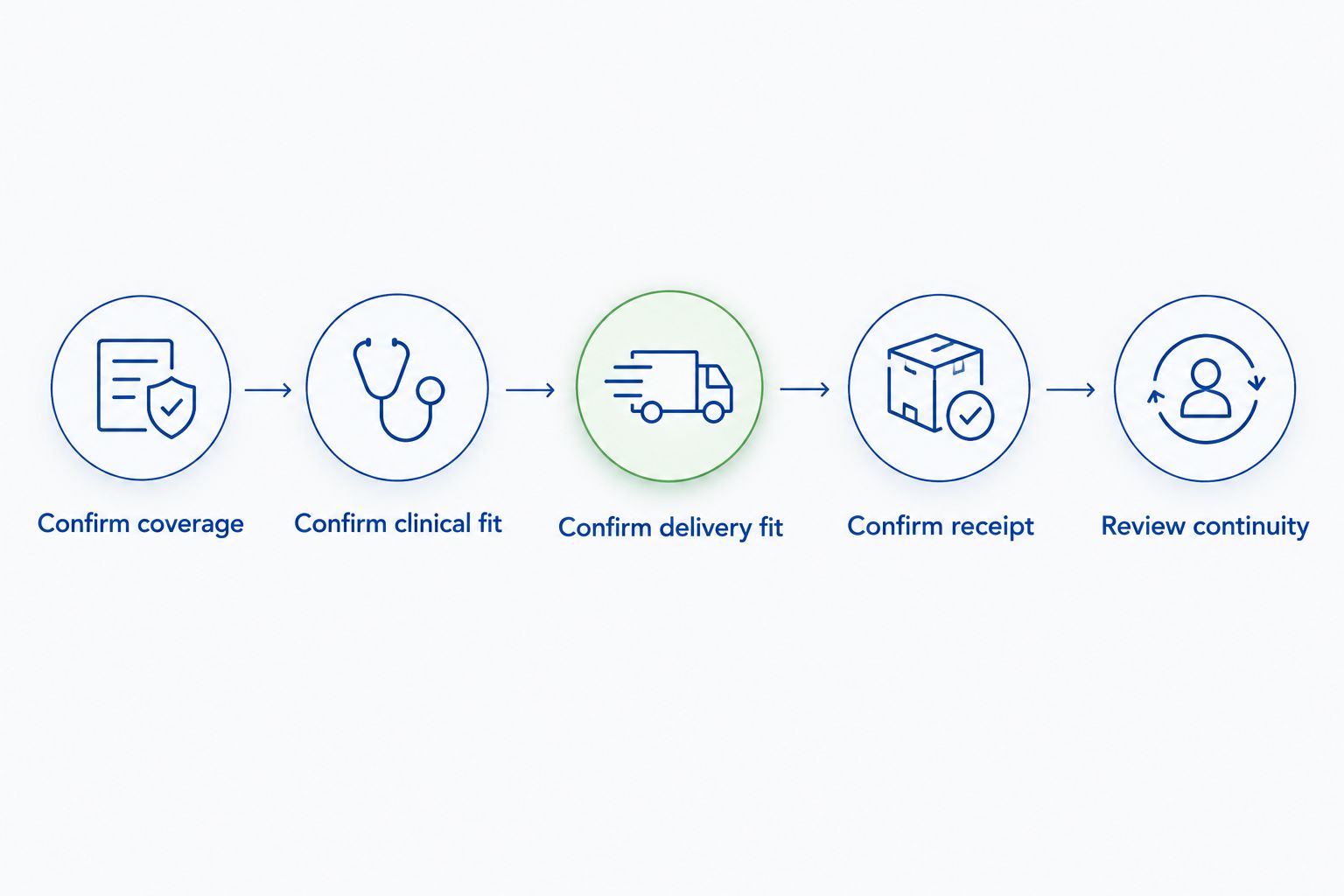
Use a documented sequence that assigns responsibility at every handoff. The recommended process below is an operating checklist, not a statement that any particular plan or supplier already follows it.
1. Confirm coverage
Identify the member’s managed care plan and the applicable nutrition service. Obtain the current requirements for eligibility, referral documentation, authorization, and provider participation.
For 2026 referrals, check the instructions in effect when the referral is submitted. Keep the source and version with the operating procedure so staff can distinguish current requirements from an older internal checklist.
2. Confirm clinical fit
Send the information needed to assess the requested meal service through the approved referral channel. Identify who owns the clinical decision and who communicates it to the meal provider.
Do not ask a logistics team to infer nutrition requirements from a diagnosis alone. The referral needs a clear, accepted specification for the food being supplied.
3. Confirm delivery fit
Verify the actual service address, contact method, delivery instructions, and receiving conditions. Ask the provider to confirm serviceability rather than relying on a broad geographic description.
Check storage and preparation needs at the same time. A deliverable address is only useful when the member can safely receive and use the food delivered there.
4. Confirm receipt
Agree on how the program records delivery and distinguishes a completed handoff from a failed attempt. Assign responsibility for notifying the member and referring organization when delivery fails.
A carrier status is operational evidence, not a complete account of member access. Define which exceptions need follow-up and who closes them.
5. Review continuity
Establish a process for address changes, revised nutrition needs, service reassessment, and the end of an authorized episode. Explain that process to the member and the participating teams.
Continuity requires an owner. Avoid leaving the member to coordinate among the health plan, clinical team, meal provider, and delivery partner after something changes.
Why statewide access varies
Statewide access varies because benefit administration and physical distribution answer different questions. A plan decides whether the member can receive the service through its program; the delivery network determines whether the authorized food can reach that member under workable conditions.
Use these factors to evaluate a proposed service pathway:
- Plan requirements: Confirm the applicable service, documentation, authorization route, and participating providers. Do not transfer one plan’s instructions to another without checking.
- Member nutrition needs: Establish that the available meals match the accepted referral requirements. Include a process for reporting a change.
- Address serviceability: Verify the delivery location with the provider. Include apartment access, receiving instructions, and address changes in the review.
- Food handling: Match transport, receiving, and storage conditions to the food supplied. Clarify who handles a delivery that cannot be safely accepted.
- Member usability: Confirm storage, preparation ability, language needs, and a workable contact method. A successful dispatch does not resolve these conditions.
- Exception ownership: Name the team responsible for rejected referrals, missed deliveries, substitutions, and interrupted service. An unresolved exception is a break in access.
For a 2026 statewide rollout, evaluate these factors by plan and service area before making a blanket coverage statement. Record confirmed coverage separately from coverage still awaiting operational acceptance.
What should a health plan ask a delivery partner?
Ask for evidence of the full service pathway, not just a coverage map. A useful review connects each geographic claim to address acceptance, food handling, communication, and exception management.
Use the following questions in procurement and implementation discussions:
- Which service addresses can the partner accept for this program?
- Which food formats can it distribute under the required handling conditions?
- How does it receive authorized meal specifications and changes?
- Who confirms the member’s receiving and storage arrangements?
- What happens when a delivery cannot be completed?
- Which records are returned to the plan or referring organization?
- Who owns the next action when a clinical or logistical issue interrupts service?
Require clear responsibility for each answer. A partner that performs transportation should not be treated as the clinical decision-maker, and a referring clinician should not become the default dispatcher for delivery problems.
Evaluate Umojahealth against its stated role in hunger-relief logistics and food-supply programs. Ask directly about the proposed scope rather than treating its broader nutrition-security services as evidence of a particular meal capability.
Discuss your food logistics needs
Review hunger-relief logistics and nutrition-security services for your organization.
Does statewide delivery mean every Medi-Cal member qualifies?
Statewide delivery does not mean every Medi-Cal member qualifies. Geographic serviceability and benefit eligibility are separate decisions, and a member needs the applicable service pathway confirmed through their plan.
Explain that distinction before referral. Avoid telling members that a meal provider’s statewide presence guarantees approval, a particular menu, or immediate enrollment.
Can a food bank support a medically tailored meal program?
A food bank can support a medically tailored meal program through an agreed food-supply or distribution role. That role does not automatically include clinical assessment, benefit authorization, or individualized meal design.
Define the food bank’s responsibilities in writing. Keep the clinical requirements, fulfillment instructions, and reporting responsibilities connected without assigning duties the organization has not accepted.
What happens when a member’s address cannot be served?
An unserviceable address requires escalation through the plan and program partners, not silent closure of the referral. Ask which authorized service arrangements or alternatives are available for that member.
Do not promise an equivalent substitute before confirming its nutrition suitability and coverage. Prepared meals, groceries, and general food assistance remain different services even when they address the same immediate food need.
FAQ
Can medically tailored meals reach Medi-Cal members statewide in 2026?
Medically tailored meals can reach Medi-Cal members statewide when plan participation, member authorization, clinical fit, and address-level delivery are established. A statewide service claim does not guarantee access for every member.
Does Medi-Cal enrollment automatically qualify someone for medically tailored meals?
Medi-Cal enrollment does not automatically establish eligibility for medically tailored meals. Confirm the applicable requirements and authorization process with the member’s managed care plan.
Who should confirm whether a member can receive medically tailored meals?
The member’s managed care plan should confirm the applicable benefit and authorization pathway. The meal provider must separately confirm clinical acceptance and delivery serviceability.
Are medically tailored meals the same as grocery boxes?
Medically tailored meals and grocery boxes are different food formats. Confirm nutrition requirements, preparation ability, and the applicable service before treating one as a substitute for the other.
What should a discharge planner confirm before referring someone for meals?
A discharge planner should confirm the service pathway, required clinical information, delivery address, and receiving conditions. Assign an owner to follow up on referral acceptance and the first delivery.
Can a food bank handle delivery without making clinical decisions?
A food bank can handle an agreed distribution role without making clinical decisions. The program must identify who owns nutrition specifications, authorization, and changes to the meal requirements.
Does Umojahealth guarantee statewide Medi-Cal meal delivery?
Umojahealth’s stated services do not establish a statewide Medi-Cal meal-delivery guarantee. Its described role is hunger-relief and food-supply logistics for food banks, government agencies, nonprofits, and healthcare providers.
One last thing
Test the exception pathway before expanding the coverage claim. Ask the participating teams to walk through an unreachable member, an inaccessible address, a changed nutrition requirement, and a failed delivery.
The useful result is a named owner and a next action for each situation. In 2026, a statewide program should describe where it can complete the service—not merely where it intends to send food.


