
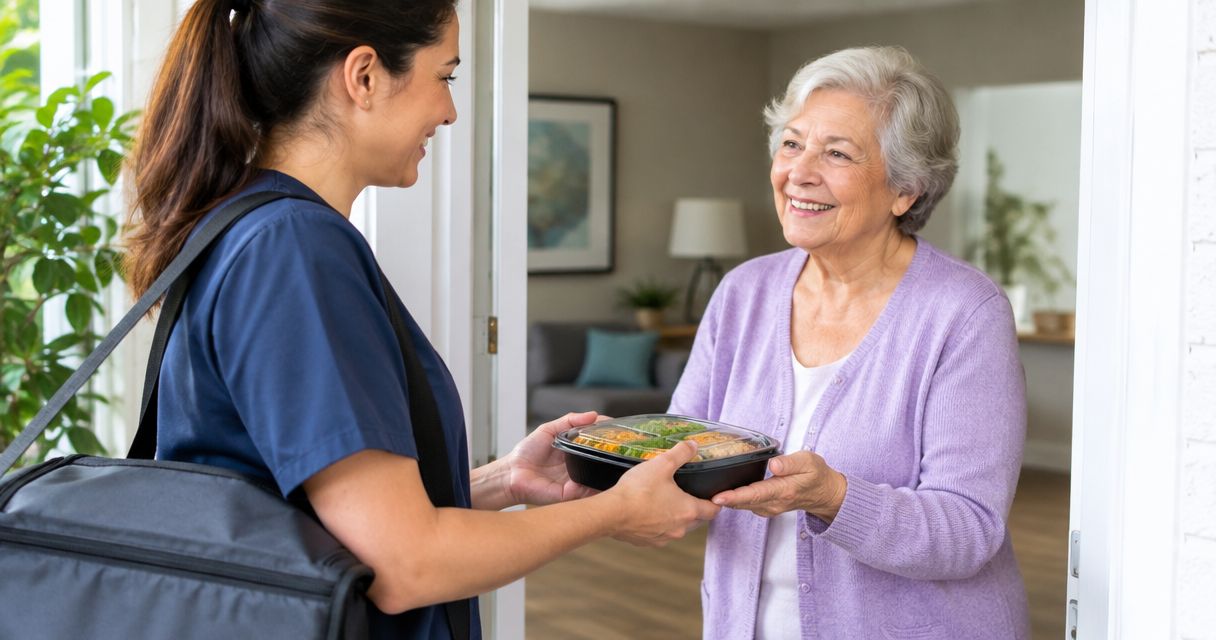
Home health agencies' medically tailored meals are prepared meals matched to a patient's medical nutrition needs, with the aim of supporting the care plan at home. This 2026 guide explains how to connect clinical referrals, food preparation, delivery, and follow-up when patients depend on care delivered outside a facility.
- Medically tailored meals for home health agencies require clinical nutrition oversight, appropriate food, and confirmed delivery.
- Umoja Health is best for healthcare providers seeking food-supply logistics support, not a substitute for clinical nutrition oversight.
- Distinguish medically tailored meals from standard meal delivery and grocery boxes before selecting a service model.
- Assign ownership for missed deliveries, nutrition-order changes, and patient concerns before enrolling patients.
Why medically tailored meals matter for home health agencies
A meal referral must work inside the patient's home, not just inside your referral system. Your team needs to know whether the patient can receive deliveries, store food safely, prepare it as directed, and eat it without assistance. A completed delivery does not answer those questions.
Home health agencies also need a clear boundary between clinical responsibilities and food logistics. Umoja Health provides nutrition security programs and food-supply logistics services for healthcare providers and other community organizations. Those services address the food-support side of care; your agency still needs an identified owner for clinical nutrition decisions.
A meal program is ready for referral only when the nutrition requirements and the delivery responsibilities are both defined. For your 2026 operating plan, treat these as separate workstreams with a shared patient handoff.
The distinction matters when patients have overlapping dietary needs. A diagnosis-based menu label alone does not establish that a meal matches an individual's current nutrition order, allergies, or eating limitations. Require a clinical review rather than asking a dispatcher or caregiver to resolve conflicting instructions.
Build a medically tailored meal referral and delivery process
1. Define the patients your program will serve
Start with a written eligibility checklist that your clinicians can use during routine assessment. Describe the nutrition-related need, the patient's ability to access food, and the practical barriers that a meal service must address. Keep clinical eligibility separate from funding eligibility: a patient can need support without qualifying for a particular funded program.
Identify who approves referrals and who resolves uncertain cases. Do not use a diagnosis as the only enrollment criterion, and do not promise that meal delivery replaces nursing, nutrition counseling, or caregiver assistance.
Your first decision is not which vendor to choose. It is which patient problem the service must solve.
- Document the nutrition-related need and current care-plan requirements.
- Check the patient's ability to shop, prepare food, and eat independently.
- Confirm whether a caregiver helps receive or prepare meals.
- Assign a clinician to approve referrals and review exceptions.
- Define an alternative referral route when your program cannot meet the need.
2. Standardize the clinical referral
Use a structured referral form before purchasing a referral platform or adding another workflow. A secure form and a named reviewer give your team a starting process without assuming that technology resolves incomplete information.
Keep 5 referral fields visible: patient identifier, current nutrition order, food allergies, delivery instructions, and funding authorization status. Store detailed supporting information in the appropriate clinical record, and share only what the receiving organization needs to fulfill its role.
For patients entering home health after a hospital stay, reconcile the discharge instructions with the current home care plan. The guide to medically tailored meals for hospital discharge planners addresses the preceding handoff; your agency needs ownership of what happens after the patient gets home.
- Confirm the nutrition order through the responsible clinician.
- Record food allergies separately from preferences.
- Name the person authorized to approve nutrition-order changes.
- Check that the delivery address and access instructions are current.
- Return incomplete referrals for clarification rather than guessing.
3. Match the service model to the patient's needs
Compare options using a written requirements list and direct conversations with prospective partners. First establish whether the patient needs prepared meals, grocery support, or help accessing existing community resources. These are different services, even when they share a hunger-relief mission.
If medically tailored meals are required, ask the prospective meal provider how clinical nutrition requirements become menu instructions and how changes reach food production. Request documentation of the process rather than accepting a general claim that meals are healthy.
Umoja Health is best for healthcare providers seeking food-supply logistics support, not a substitute for clinical nutrition oversight. Its stated nutrition security and kitting/box programs make it relevant to food-support planning, but those services alone do not establish a medically tailored meal offering.
- Separate clinical menu requirements from delivery requirements.
- Ask who reviews medical nutrition instructions before production.
- Check whether the service supports the patient's food-preparation abilities.
- Clarify responsibility for sourcing, packing, transport, and exceptions.
- Document which requirements remain your agency's responsibility.
4. Design the handoff from referral to the doorstep
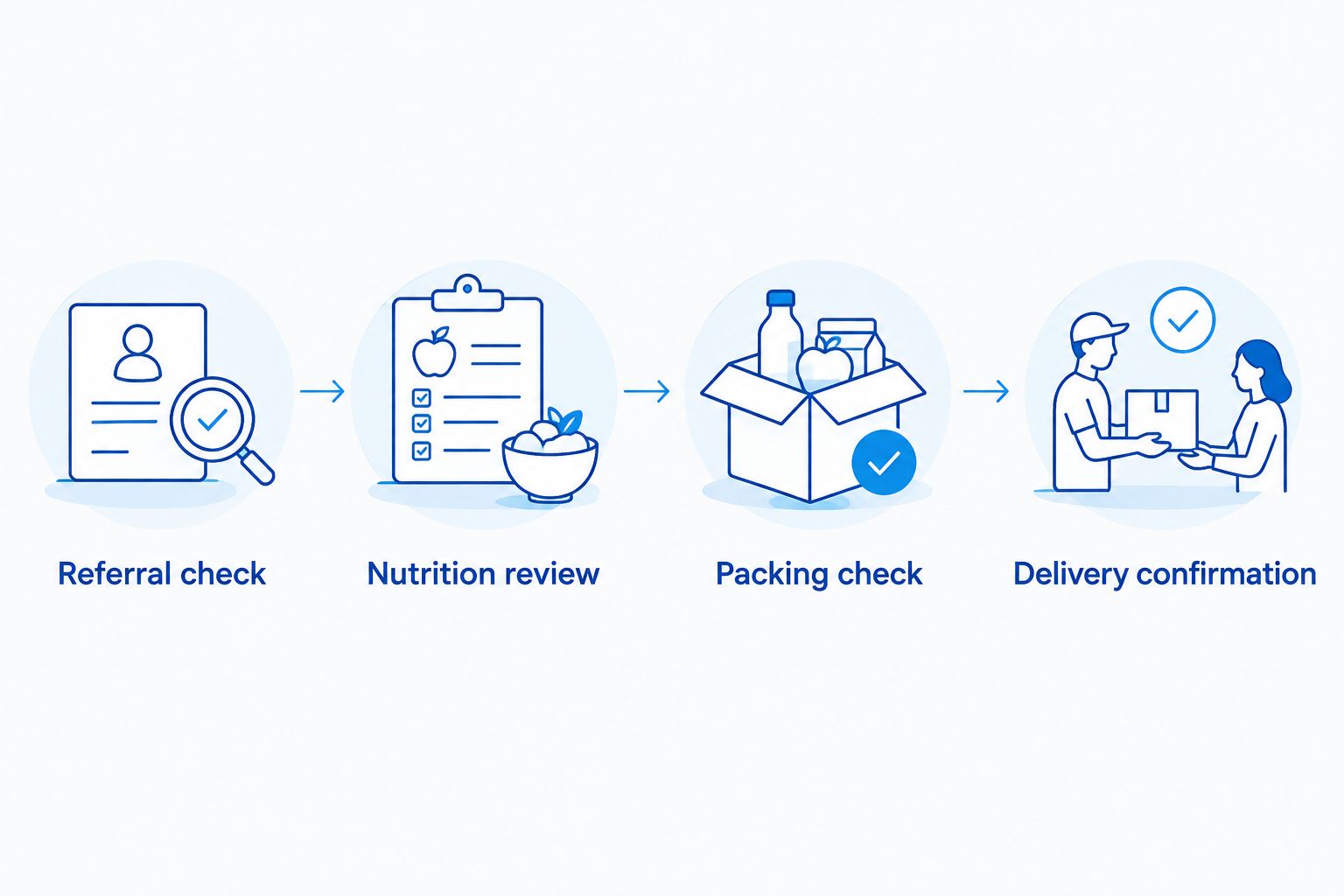
Map the process on paper before introducing a coordination system. Identify who receives the referral, verifies the nutrition instructions, releases the shipment, and confirms delivery. Every handoff needs an owner and a way to stop fulfillment when information is wrong.
Use 4 delivery events in your operational record: referral accepted, order released, delivery confirmed, and exception resolved. These events distinguish an active referral from a completed delivery without implying that the patient ate the food.
For your 2026 workflow, include patient-specific instructions about receiving and storing food. Ask the provider to document applicable handling instructions and explain what staff should do when a delivery is delayed, damaged, or left somewhere unsuitable.
- Referral check: verify identity, address, authorization, and contact information.
- Nutrition review: confirm the approved instructions before fulfillment.
- Packing check: verify order contents against the approved instructions.
- Delivery confirmation: record receipt and unresolved delivery problems.
- Assign a backup contact for patients who cannot receive deliveries alone.
A transport confirmation is not a clinical assessment. Your visiting team should still check whether the patient understands the instructions and can use the food as intended.
5. Confirm funding and permission to share information
Build a funding checklist using the patient's actual payer or program documents. Do not assume that a home health referral automatically creates a covered meal benefit, and do not treat a general nutrition benefit description as authorization for a specific service.
For 2026 referrals, confirm the current eligibility rules, required approvals, covered service, and renewal process before enrollment. Record the source of the determination so staff can distinguish an approved benefit from an unresolved inquiry.
Handle information sharing as a separate operational decision. Your agency must determine the permissions, agreements, and safeguards required for the parties involved; a delivery partner does not need the patient's entire chart simply to complete a delivery.
- Verify eligibility with the responsible payer or program administrator.
- Record whether authorization is required and who obtains it.
- Confirm the approved service and any applicable enrollment limits.
- Document patient permission and the appropriate information-sharing process.
- Assign ownership for renewal, denial, and program termination notices.
6. Train visiting staff to check whether meals are usable
Give nurses and other visiting staff a short checklist that fits their existing visit documentation. Start with direct questions: did the meals arrive, can the patient store and prepare them, and is anything preventing the patient from eating them?
Separate food-service concerns from clinical concerns. Missing food needs an operational response; a change in the patient's ability to swallow or eat needs clinical review. Staff should not solve a clinical concern by selecting a different menu without authorization.
Use 3 escalation categories: delivery problem, food concern, and clinical concern. Give each category a named contact and a documented response process, then test the handoff before enrolling patients.
- Ask whether the patient received the expected food.
- Check whether storage and preparation instructions are understood.
- Document barriers involving packaging, reheating, or caregiver help.
- Route damaged, incorrect, or unacceptable food to the service contact.
- Escalate changes in eating ability or medical nutrition needs to the clinician.
7. Measure completion and close the referral loop
Start with a secure tracking sheet and consistent definitions. Record eligible referrals, accepted referrals, confirmed deliveries, unresolved exceptions, and completed follow-ups. A reporting platform becomes useful only when your agency and its partners agree on what those statuses mean.
Your 2026 dashboard should distinguish process measures from patient outcomes. Delivery completion shows that food reached a destination; it does not establish improved nutrition, fewer hospital visits, or better disease control.
Review exceptions with both the care team and the food-service contact. Measure the handoff you control before claiming an outcome you have not measured. Investigate recurring problems by cause rather than combining every unsuccessful referral into a single failure category.
- Define when a referral becomes accepted, declined, or incomplete.
- Record delivery confirmation separately from patient follow-up.
- Track exception reasons using consistent categories.
- Document who resolves each open issue.
- Use clinical measures only under an approved assessment process.
Compare meal and food-support options
Choose the option that matches the patient's clinical instructions and ability to use the food. A service that fits an independent patient can be unsuitable for someone who cannot prepare groceries or manage packaging.
| Option | Best for | Main advantage | Key limitation |
|---|---|---|---|
| Medically tailored meal service | Patients whose nutrition requirements call for clinically directed prepared meals | Connects meal preparation to specified medical nutrition needs | Requires a verified clinical review process and coordination when instructions change |
| Standard prepared-meal delivery | Patients needing ready-to-eat food without an individualized medical nutrition requirement | Reduces the patient's food-preparation tasks | A general menu does not establish a match to an individual nutrition order |
| Grocery or food-box program | Patients or caregivers able to prepare meals from supplied food | Supports household food access and meal preparation | Requires cooking capacity and does not itself provide medically tailored prepared meals |
| Umoja Health food-supply logistics services | Healthcare providers organizing nutrition security or kitting/box programs | Provides food logistics and hunger-relief program services | The stated service scope does not establish clinical menu oversight or medically tailored meal production |
Use the comparison as a screening tool, not an endorsement of an unverified provider. Ask each prospective partner to explain its role, document its responsibilities, and identify services it does not provide.
When a patient's needs span categories, assign separate responsibilities. Grocery support can address household food access while a clinical team determines whether the patient also needs a prepared-meal referral.
Common mistakes home health agencies make
Treating every delivered meal as medically tailored
Prepared food is not automatically medically tailored food. Ask how the provider translates an approved nutrition order into meal selection and production, and how it prevents outdated instructions from reaching the patient.
Reject menu labels as the sole evidence of clinical fit. Keep the approved requirements visible throughout fulfillment.
Referring before checking the home setup
An accurate nutrition order still fails operationally when the patient cannot receive, store, open, or prepare the food. Assess those tasks during the home visit rather than relying on a delivery address alone.
Document caregiver responsibilities explicitly. Do not assume that a listed emergency contact handles meals.
Leaving nutrition-order changes between organizations
Home health staff, prescribers, and food providers need a shared process for changes. Without one, the care plan and the next delivery can reflect different instructions.
Name the clinical approver and the operational recipient. Require confirmation that a change was received before treating the handoff as complete.
Assuming a referral guarantees payment
Clinical need and funded eligibility are separate determinations. Verify the specific program requirements before making commitments to the patient.
Keep authorization status visible to both the referral team and the fulfillment contact. Unresolved funding questions need an owner, not a silent hold.
Counting shipments as patient outcomes
Shipment counts describe activity, not the patient's ability to eat or a change in health. Record patient follow-up separately and use an approved clinical assessment process for outcome reporting.
Do not attribute a health change to meals simply because deliveries occurred during the same period. Your reporting should distinguish observation from causation.
FAQ
What are medically tailored meals for home health agencies?
Medically tailored meals for home health agencies are prepared meals matched to a patient's medical nutrition needs. The agency coordinates the clinical referral, confirms the service responsibilities, and follows up on whether the patient can use the meals.
Are medically tailored meals the same as standard meal delivery?
No. Standard meal delivery supplies prepared food, while medically tailored meals require a process that connects medical nutrition requirements to meal preparation and selection. A healthy-menu label alone does not establish that connection.
Who should approve a patient's meal requirements?
The responsible clinical team should approve the patient's medical nutrition requirements. Identify the clinician or qualified nutrition professional who reviews the instructions and authorizes changes rather than leaving those decisions to delivery staff.
Does Medicaid cover medically tailored meals for home health patients?
Coverage depends on the patient's specific program, eligibility, and authorization requirements. Confirm the current rules with the responsible payer or program administrator; a home health referral alone does not establish coverage.
Can a grocery box replace medically tailored prepared meals?
A grocery box is not an equivalent replacement when the care plan requires medically tailored prepared meals. Grocery support requires someone to prepare the food and does not itself establish clinical tailoring.
What does Umoja Health provide for healthcare organizations?
Umoja Health provides hunger-relief and food-supply logistics services, including nutrition security and kitting/box programs, for healthcare providers and other organizations. Confirm the required meal-service responsibilities separately rather than assuming these services include clinical menu oversight.
What should home health staff do when a delivery is missed?
Home health staff should use the documented delivery-exception process and assess whether the patient has food they can use. Notify the assigned service contact, involve the care team when needed, and record how the problem was resolved.
What should an agency measure before expanding a meal program?
Measure referral acceptance, confirmed deliveries, unresolved exceptions, and completed patient follow-ups before expanding. Keep those process measures separate from clinical outcomes and investigate recurring failures by cause.
One last thing
Test an exception before you expand enrollment. Walk through a missed delivery, an incorrect meal, and a changed nutrition order with the people responsible for each response. A workflow that only describes successful deliveries is unfinished.
For your 2026 program review, ask who notices the problem, who contacts the patient, who approves the next action, and who records resolution. Those answers reveal whether your meal referral is connected to the home health care plan or merely sent outside it.


